
Key Takeaways
- Norovirus is a non-enveloped virus, which makes it significantly harder to kill than most common pathogens
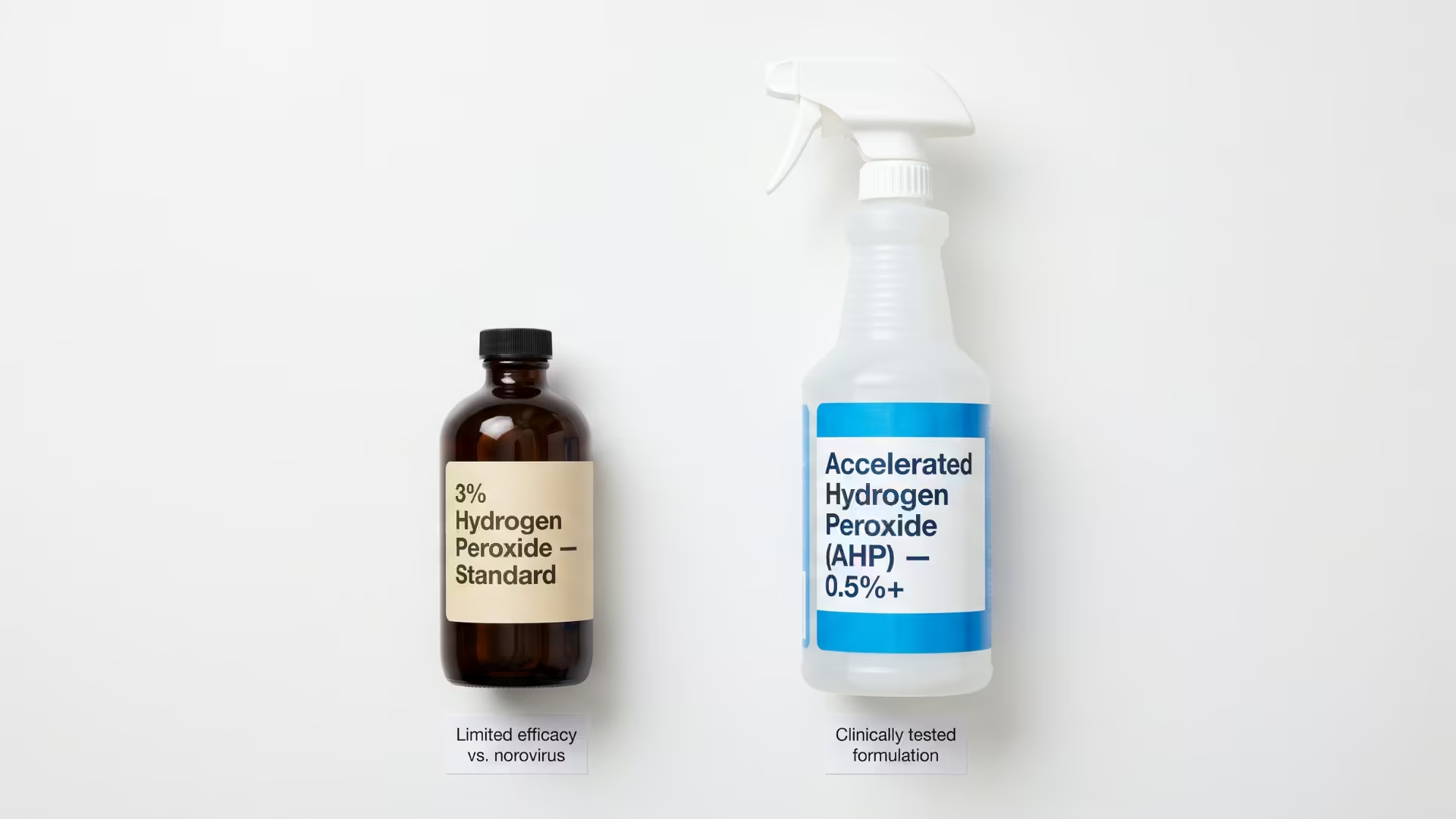
- Standard 3% hydrogen peroxide may not reliably destroy norovirus at typical household contact times
- Bleach-based disinfectants (sodium hypochlorite) remain the most widely recommended option for hard surfaces
- Hypochlorous acid (HOCl) offers a compelling, safer alternative that can be effective against norovirus
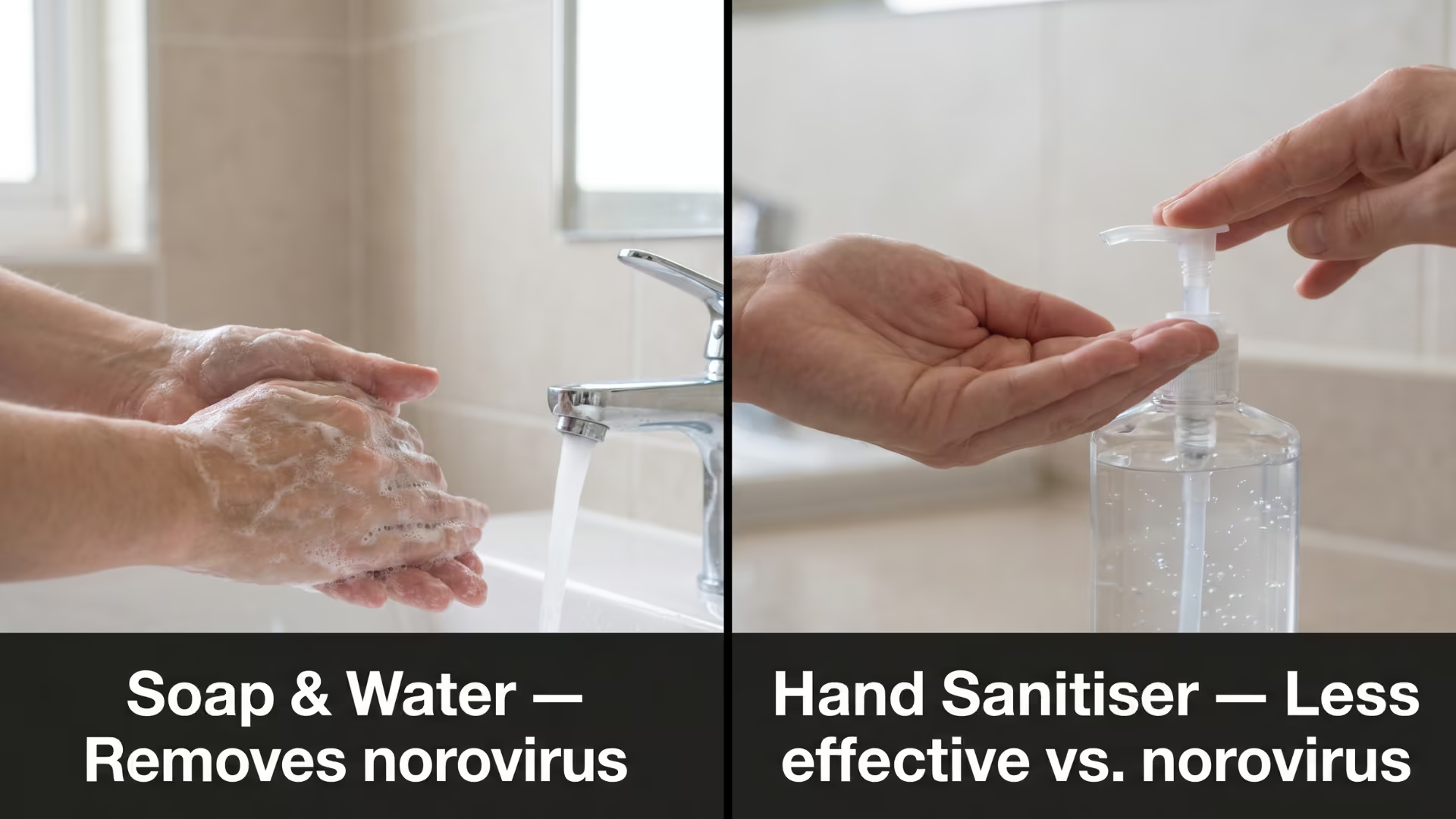
- Hand sanitizer alone is not enough. Washing your hands with soap and water for at least 20 seconds matters here
- Always check that your disinfectant's product label specifically claims effectiveness against norovirus
What Is Norovirus? The "Stomach Bug" That's Harder to Kill Than You Think

Norovirus is a highly contagious virus that causes acute gastroenteritis, what most people call the “stomach flu” or stomach bug. It brings on vomiting and diarrhea fast, often within 12 to 48 hours of exposure, and spreads with alarming ease.
According to the Centers for Disease Control and Prevention, norovirus is the leading cause of foodborne illness in the United States, responsible for roughly 19 to 21 million illnesses every year. Long-term care facilities, healthcare settings, schools, and cruise ships tend to see the worst outbreaks. One sick person can set off an entire household.
What makes norovirus particularly stubborn is its structure. Unlike influenza or COVID-19, norovirus is a non-enveloped virus. That outer lipid (fatty) layer that alcohol-based products strip away? Norovirus doesn’t have one. Norovirus particles can survive on contaminated surfaces for days, sometimes weeks, and it takes fewer than 20 viral particles to infect a person. That’s a very small number.
According to the Centers for Disease Control and Prevention, norovirus is the leading cause of foodborne illness in the United States, responsible for roughly 19 to 21 million illnesses every year. Long-term care facilities, healthcare settings, schools, and cruise ships tend to see the worst outbreaks. One sick person can set off an entire household.
What makes norovirus particularly stubborn is its structure. Unlike influenza or COVID-19, norovirus is a non-enveloped virus. That outer lipid (fatty) layer that alcohol-based products strip away? Norovirus doesn’t have one. Norovirus particles can survive on contaminated surfaces for days, sometimes weeks, and it takes fewer than 20 viral particles to infect a person. That’s a very small number.
Does Hydrogen Peroxide Kill Norovirus?
This is where it gets a little complicated. Hydrogen peroxide works as an oxidizing agent (it damages the structural components of pathogens), and there’s reasonable evidence that it can be effective against a range of viruses. But whether it kills norovirus reliably depends on two things: concentration and contact time.
Standard 3% hydrogen peroxide, the kind you’d find at a pharmacy, has shown limited efficacy against non-enveloped viruses like norovirus at typical household contact times. A quick spray-and-wipe is unlikely to do the job.
More concentrated formulations, including Accelerated Hydrogen Peroxide (AHP) products at 0.5% and above, have demonstrated better results in clinical and laboratory settings. Some of these are registered as disinfectants specifically formulated for healthcare facilities and norovirus outbreaks. The key difference is that AHP products are stabilized and optimized in a way that basic pharmacy-grade hydrogen peroxide simply isn’t.
So the honest answer: standard hydrogen peroxide alone probably isn’t your best choice for a norovirus situation.
Standard 3% hydrogen peroxide, the kind you’d find at a pharmacy, has shown limited efficacy against non-enveloped viruses like norovirus at typical household contact times. A quick spray-and-wipe is unlikely to do the job.
More concentrated formulations, including Accelerated Hydrogen Peroxide (AHP) products at 0.5% and above, have demonstrated better results in clinical and laboratory settings. Some of these are registered as disinfectants specifically formulated for healthcare facilities and norovirus outbreaks. The key difference is that AHP products are stabilized and optimized in a way that basic pharmacy-grade hydrogen peroxide simply isn’t.
So the honest answer: standard hydrogen peroxide alone probably isn’t your best choice for a norovirus situation.

Bleach vs. Hydrogen Peroxide: Which One Actually Works?
Bleach (sodium hypochlorite) is the disinfectant most commonly recommended for norovirus by public health authorities. A bleach solution with a concentration of 5 to 25 tablespoons of household bleach per gallon of water is the standard guidance for disinfecting hard surfaces after a norovirus outbreak.
Chlorine bleach is effective, yes. But it comes with real trade-offs:
Chlorine bleach is effective, yes. But it comes with real trade-offs:
- Corrosive to skin, eyes, and many surfaces (as documented in its Safety Data Sheet, which flags severe skin burns and a pH of 12 to 13)
- Produces toxic chlorine gas if mixed with acids, including many common cleaning products
- Discolors fabrics and damages metals
- Can be hazardous in poorly ventilated spaces
Hydrogen peroxide at 3% is gentler on surfaces, but as discussed above, may fall short against non-enveloped viruses without longer contact time and higher concentration.
What about hypochlorous acid (HOCl)?
HOCl sits in an interesting position. It’s the same antimicrobial compound your own white blood cells produce to fight infection, and it’s shown broad-spectrum efficacy including against calicivirus, the family norovirus belongs to. To understand what hypochlorous acid actually is and how it works, it helps to know that unlike bleach, it has a near-neutral pH, making it non-corrosive and safe for skin, eyes, and most surfaces.
It leaves no harmful chemical residues after use. And unlike alcohol-based hand sanitizer, it works on non-enveloped pathogens. For a deeper look at how HOCl stacks up directly against bleach on safety, efficacy, and practical use, our hypochlorous acid vs. bleach comparison covers the full picture.
It leaves no harmful chemical residues after use. And unlike alcohol-based hand sanitizer, it works on non-enveloped pathogens. For a deeper look at how HOCl stacks up directly against bleach on safety, efficacy, and practical use, our hypochlorous acid vs. bleach comparison covers the full picture.

How to Disinfect Surfaces During a Norovirus Outbreak
When someone in your household has norovirus, speed and method both matter. Here’s what the CDC and disease control guidance recommends:
- Put on disposable gloves before cleaning up any vomit or feces
- Use paper towels to remove visible waste, then place them directly into a plastic trash bag
- Apply your disinfectant to hard surfaces, paying close attention to contact time (check your product label for the specific dwell time required)
- Do not wipe immediately. The disinfectant needs time to work
- Wash contaminated clothing and items separately, at the highest heat setting available
- After cleanup, wash your hands with soap and water thoroughly, not just hand sanitizer
For disinfectant wipes, check the product label carefully. Not all wipes are registered as effective against norovirus. The active ingredient matters: look for sodium hypochlorite or a verified antimicrobial claim that includes calicivirus or feline calicivirus (FCV), which researchers use as a norovirus surrogate in testing because norovirus itself is difficult to culture in labs.
If you want a disinfectant that’s genuinely safe for homes with children, pets, or people with sensitive skin, the Aqua Protego HOCl Disinfectant Spray 500ml is worth considering, offering hospital-grade disinfection without the corrosive hazards of bleach.
If you want a disinfectant that’s genuinely safe for homes with children, pets, or people with sensitive skin, the Aqua Protego HOCl Disinfectant Spray 500ml is worth considering, offering hospital-grade disinfection without the corrosive hazards of bleach.
Don't Rely on Hand Sanitizer Alone
Most alcohol-based hand sanitizers work by disrupting the lipid (fatty) envelope of viruses. Since norovirus doesn’t have that envelope, alcohol sanitizers are notably less effective against it compared to enveloped viruses like influenza.
This doesn’t mean hand sanitizer is useless. Used on top of good hand hygiene, it adds a layer of protection. But for norovirus specifically, hand washing with soap and water for at least 20 seconds is genuinely the more reliable option.
Soap doesn’t “kill” viruses outright, it physically removes them from your skin and washes them away. For anyone managing norovirus in a home, care facility, or commercial space, this distinction matters more than it might seem. And if you’ve ever wondered whether other common household alternatives hold up, our piece on whether vinegar actually disinfects is a useful read alongside this one.
This doesn’t mean hand sanitizer is useless. Used on top of good hand hygiene, it adds a layer of protection. But for norovirus specifically, hand washing with soap and water for at least 20 seconds is genuinely the more reliable option.
Soap doesn’t “kill” viruses outright, it physically removes them from your skin and washes them away. For anyone managing norovirus in a home, care facility, or commercial space, this distinction matters more than it might seem. And if you’ve ever wondered whether other common household alternatives hold up, our piece on whether vinegar actually disinfects is a useful read alongside this one.
Frequently Asked Questions
For enveloped viruses, standard 3% hydrogen peroxide can be effective in around 1 to 5 minutes. For non-enveloped viruses like norovirus, the contact time needs to be longer, and the concentration likely needs to be higher than 3%. Accelerated hydrogen peroxide formulations generally perform better and faster.
Bleach-based solutions (sodium hypochlorite, also called chlorine bleach) are the most commonly recommended option. Some quaternary ammonium compound products, certain accelerated hydrogen peroxide formulations, and HOCl-based disinfectants may also be effective. Always verify the product’s antimicrobial claim specifically mentions norovirus or feline calicivirus. For more detail on HOCl’s specific efficacy, see our full guide on whether hypochlorous acid kills norovirus.
Clorox and some other disinfectant wipes carry norovirus claims, but not all wipes do. Check the product label for the active ingredient and the list of pathogens it’s registered against.
Norovirus spreads through contact with contaminated surfaces, direct contact with a sick person, contaminated food or water, and aerosolized particles from vomiting. It survives on surfaces for days and is extremely contagious.
Generally, 3% hydrogen peroxide is safe for most hard floor surfaces and won’t leave harmful residues once dry. For norovirus disinfection specifically though, it may not be sufficient on its own. A bleach solution or an HOCl disinfectant would be a more reliable choice.
Isolate the sick person where possible, disinfect hard surfaces and high-touch areas regularly, wash hands with soap and water frequently, launder contaminated items immediately, and avoid preparing food for others until at least 48 hours after symptoms have resolved.


