
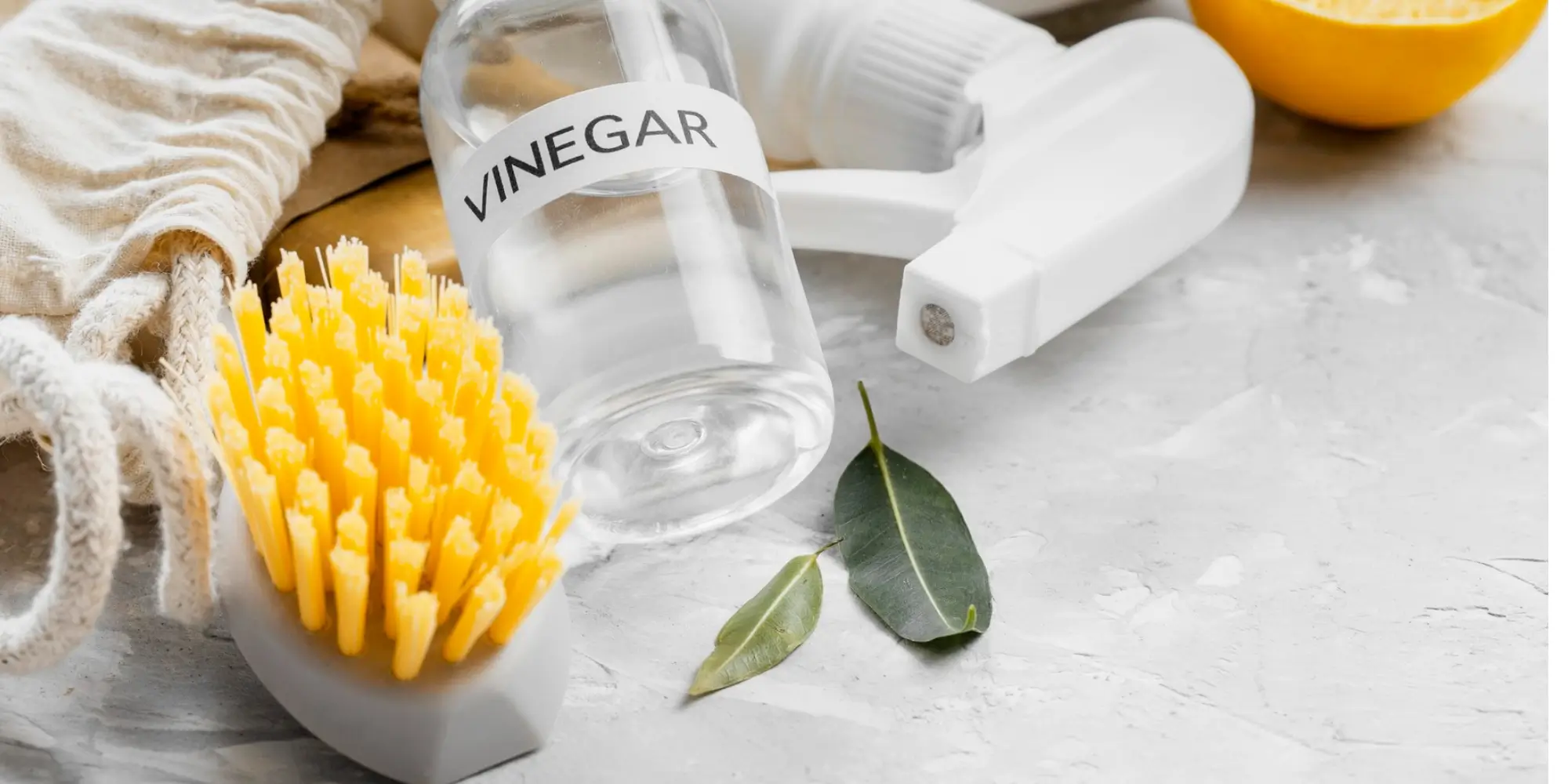
Picture this: You’re standing in your kitchen, eyeing that bottle of vinegar and wondering if it’s really doing the job of keeping your surfaces clean. You’re not alone – this is one of the most common questions I get about natural cleaning alternatives.
The science shows vinegar’s abilities are more nuanced. Research by Bjarnsholt et al. (2014) found that vinegar’s active ingredient – acetic acid – can effectively eliminate certain bacteria, but there are important limitations to understand.
Is Vinegar a Disinfectant or Just an Antibacterial Cleaner?
According to research published in “Advances in Wound Care” (Bjarnsholt et al., 2014), vinegar’s main component – acetic acid – does show promising antibacterial properties against certain types of bacteria:
- E. coli (common in kitchen contamination)
- Salmonella (food safety concern)
- Staphylococcus aureus (surface contamination)
- Some biofilm-forming bacteria
- Concentration levels
- Contact time
- Surface type Temperature
- Type of contamination
- Temperature
However, here’s something crucial to understand: while vinegar has legitimate cleaning power, it’s not a registered disinfectant with the EPA. This means it hasn’t met the stringent criteria for killing 99.9% of pathogens in standardized testing.
Comparing Vinegar to Modern Disinfectants
When Should You Not Use Vinegar for Cleaning?
1. Surface Restrictions:
- Natural stone (marble, granite)
- Unsealed wood
- Electronic screens
- Rubber seals
- Certain metals
2. Situation-Specific Limitations:
- Medical equipment sanitization
- Food service sanitization requirements
- Regulated cleaning environments
- When quick disinfection is needed
A Better Alternative: The Rise of HOCl
While vinegar has its place, I’ve been particularly impressed by Hypochlorous Acid (HOCl) as a
modern alternative. Here’s why:
- Matches the body’s natural immune response
- EPA-registered disinfectant
- No harsh chemical residue
- Effective against a broader range of pathogens
- Works faster than vinegar
- Safe for food contact surfaces
Different Types of Vinegar for Cleaning: What Works Best?
1. White Distilled Vinegar
- Most effective for cleaning (5-7% acetic acid)
- Best price-to-performance ratio
- Leaves no residual odor after drying
2. Apple Cider Vinegar
- Slightly less acidic
- Contains additional beneficial compounds
- May leave a slight apple scent
3. Cleaning Vinegar
- Higher concentration (up to 20% acetic acid)
- Not safe for consumption
- More effective but requires careful handling
The Disadvantages of Vinegar in Cleaning
- Not effective against all pathogens
- Can damage certain surfaces (especially natural stone)
- Takes longer to kill bacteria than commercial disinfectants
- Strong odor during use
- May not be suitable for some metals due to corrosion

How Does Vinegar Kill Germs When Cleaning?
- Penetrating bacterial cell membranes
- Disrupting cell structures
- Preventing bacterial reproduction
- Creating an inhospitable pH environment for microorganisms
- 10% vinegar
- 1.5% citric acid Can dramatically improve its antimicrobial properties.
Pro Tip: How to Disinfect with Vinegar Effectively
Through testing and research validation, I’ve found these methods maximize vinegar’s
cleaning power:
- Clean surface first to remove debris
- Apply full-strength white vinegar
- Let it sit for at least 10 minutes (crucial for germ-killing properties) don’t rush it, set a timer.
- Wipe with a clean cloth
- Repeat for heavily soiled areas
How to Use Vinegar for Cleaning: Practical Solutions That Actually Work
Effective Vinegar Cleaning Solutions (Research-Backed Recipes)
1. Basic Cleaning Solution
- 5% vinegar solution
- Best for: Surface bacteria reduction
- Contact time: 5-10 minutes
2. Enhanced Disinfecting Solution
- 10% vinegar with 1.5% citric acid
- Best for: Stronger antimicrobial action
- Contact time: 10 minutes minimum
Safety First: Important Precautions
Before you start cleaning, here are crucial safety tips backed by research:
Never Mix Vinegar With:
- Bleach (creates toxic chlorine gas)
- Hydrogen peroxide (creates peracetic acid)
- Baking soda (neutralizes cleaning properties)
- Commercial cleaners (unknown chemical reactions)
When to Choose Something Stronger
1. High-Risk Situations
- Medical equipment cleaning
- Food preparation surfaces
- After flood or sewage exposure
- When dealing with known pathogens
2. Better Alternatives
- Hypochlorous acid (HOCl) for sanitizing food surfaces & even killing mold/fungi!
- EPA-registered disinfectants for regulated environments
- Commercial cleaners for specific materials
The Bottom Line: Is Vinegar a Reliable Disinfectant?
What Vinegar Does Well:
- Handles everyday cleaning tasks effectively
- Works great for removing mineral deposits
- Kills some common household bacteria
- Provides an eco-friendly cleaning option
- Saves money compared to commercial cleaners
What Vinegar Does :
- Not EPA-registered as a disinfectant
- Takes longer to kill germs than commercial products
- Won’t kill all types of bacteria and viruses
- Can damage certain surfaces
- Strong odor that some people find unpleasant
Making the Smart Choice
- EPA registration
- Faster kill times
- Broader spectrum of effectiveness
- No harsh odors
Final Recommendation
- Food prep areas
- During illness outbreaks
- High-traffic surfaces
- Bathroom sanitization
- Healthcare-related cleaning
Frequently Asked Questions About Cleaning With Vinegar
While vinegar has some antimicrobial properties, it’s not technically a disinfectant. Research
shows it can kill certain bacteria, but it doesn’t meet EPA standards for disinfection. For true
disinfection, you’ll want to use an EPA-registered product like hypochlorous acid (HOCl).
Antibacterial means it can kill some bacteria, which vinegar does. A disinfectant must kill
99.9% of germs in standardized testing. Vinegar doesn’t meet this threshold. Think of it like the difference between washing your hands with water versus using hand sanitizer.
The biggest drawbacks are:
- Long contact time needed to kill germs
- Can’t kill all types of pathogens
- Strong smell during use
- Can damage certain surfaces
- Not suitable for natural stone, wood, or some metals
- Less effective than commercial disinfectants
If you’re using vinegar for cleaning:
- Create a 1:1 solution with water
- Apply to a clean surface
- Let sit for at least 10 minutes
- Wipe with a clean cloth
- Repeat for heavily soiled areas
Remember though, this isn’t true disinfection – it’s more like enhanced cleaning.
Vinegar can reduce some germs on kitchen surfaces, but it’s not reliable enough for food
safety. For food prep areas, use an EPA-registered disinfectant or a food-safe alternative like
HOCl.
No! This is extremely dangerous. Never mix vinegar with:
- Bleach
- Hydrogen peroxide
- Ammonia
- Other commercial cleaners These combinations can create toxic gases or dangerous
chemical reactions.
Most research suggests a minimum of 10 minutes, but some bacteria may require up to 30 minutes of contact time. Commercial disinfectants typically work in 1-5 minutes, making them more practical for many situations.
While apple cider vinegar has similar properties, white vinegar is better for cleaning because:
- It’s usually cheaper
- Has no color that might stain
- Contains similar or higher acetic acid levels
- Doesn’t leave behind sticky residue
- Has less odor after drying
No, you need to be careful. Here’s a quick guide:
- Safe for: toilets, sinks, shower doors, ceramic tile
- Avoid using on: natural stone, grout, rubber seals
- Test first on: metal fixtures (can damage some finishes)
While vinegar may help with surface mold, it:
- Doesn’t penetrate porous surfaces
- Won’t prevent mold regrowth
- Isn’t EPA-approved for mold remediation
- Should not be relied on for serious mold issues
Standard white vinegar (5-7% acetic acid) is usually sufficient. Higher concentrations:
- Aren’t necessarily more effective
- Can be more damaging to surfaces
- Increase risk of skin irritation
- Cost more without proportional benefits
While vinegar can help clean these appliances:
- Use sparingly (once a month maximum)
- Avoid with rubber seals or gaskets
- Never mix with detergents
- Run an empty cycle afterward
Short answer: no. While vinegar is versatile, you should:
- Keep disinfectants for high-risk areas
- Use specialized cleaners for delicate surfaces
- Have appropriate cleaners for specific stains
- Maintain proper cleaning products for regulated environments
While vinegar is generally safer than harsh chemicals:
- Keep area ventilated during use
- Store out of reach
- Avoid using around sensitive pets (especially birds)
- Don’t let pets walk on wet vinegar solutions
Try these evidence-based tips:
- Use warm water to dilute
- Add citric acid for extra cleaning power
- Increase contact time for tougher jobs
- Apply with a microfiber cloth for better coverage


