
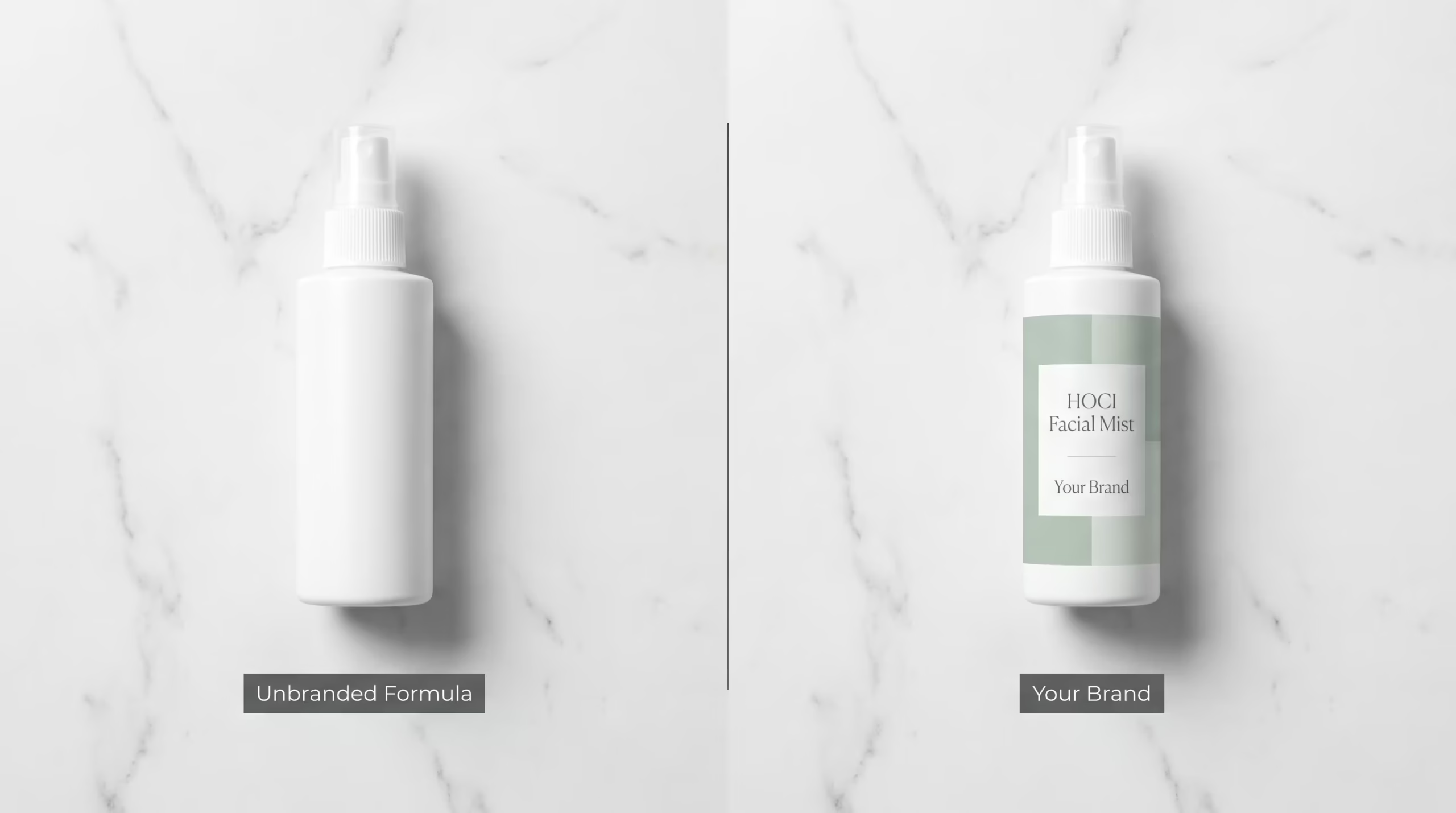
More entrepreneurs and brands are launching their own hypochlorous acid skincare products right now — facial mists, sprays, all under their own name. Here’s what’s worth knowing before you start: where the real costs sit, what catches people off guard, and the four things almost everyone gets wrong going in.
There’s a real boom happening right now. More brands, founders, and entrepreneurs want their own HOCl cosmetic product — facial mists, skincare sprays — under their own name.
And the reason it feels achievable is because it is. White label makes this genuinely accessible. You’re not formulating from scratch. You’re taking an existing, tested, approved HOCl formulation and putting your brand on it.
And the reason it feels achievable is because it is. White label makes this genuinely accessible. You’re not formulating from scratch. You’re taking an existing, tested, approved HOCl formulation and putting your brand on it.
That's the good news. Here's where people get caught out.
“Accessible” gets misread as “easy, cheap, fast.” It’s none of those — not because the process is broken, but because four things consistently surprise first-time founders. None of them are dealbreakers. All of them are easier to handle if you know about them before you start.
Trap 1 :
Your MOQ isn't what you think it is
Ask a manufacturer for the minimum order quantity on the HOCl formulation itself, and the number can look low — sometimes a few hundred litres. Founders plan their whole launch around that figure.
Then they get a quote for bottles and spray triggers, and the real MOQ shows up. Packaging suppliers commonly set minimums of 5,000 to 10,000 units for smaller spray bottle formats. The HOCl is rarely the bottleneck. The bottle is.
Then they get a quote for bottles and spray triggers, and the real MOQ shows up. Packaging suppliers commonly set minimums of 5,000 to 10,000 units for smaller spray bottle formats. The HOCl is rarely the bottleneck. The bottle is.
- Plan your launch volume around packaging, not formulation.
Trap 2 :
It's not expensive — but it's not cheap either
HOCl sits in an odd middle ground. It’s not a premium specialty ingredient with a premium price tag. It’s also not water, which is what some founders expect given how simple the chemistry sounds (it’s literally just electrolyzed salt water).
- Budget for "moderate," not "minimal." Founders who price their product assuming near-zero ingredient cost usually end up re-pricing after their first production run.
Want this saved for later?
Get the full breakdown as a PDF, sent straight to your inbox.
Adds you to our monthly newsletter — unsubscribe anytime.
Trap 3 :
"Easy" still means "regulated"
White label genuinely simplifies the process. It does not remove the legal requirements.
Selling a cosmetic product, anywhere, means the formulation needs to meet cosmetic-specific safety and compliance standards — not just be “HOCl that works.”
Skip this step, or work with a manufacturer who hasn’t already done it properly, and you’re either exposed to compliance risk or paying to redo the legal groundwork yourself, after you’ve already spent on packaging and stock.
Skip this step, or work with a manufacturer who hasn’t already done it properly, and you’re either exposed to compliance risk or paying to redo the legal groundwork yourself, after you’ve already spent on packaging and stock.
| Region | What's Required |
|---|---|
| UK | Cosmetic Product Safety Report (CPSR) and a named Responsible Person. |
| US | Meet FDA cosmetic requirements and stay clearly on the cosmetic side of the line — not drift into drug claims. |
| UAE | Typically registered through Dubai Municipality's Montaji system. Products making therapeutic claims shift into MOHAP's stricter pathway instead. |
- Ask your manufacturer what's already been done — and what's still on you.
Trap 4 :
You probably can't say what you think you can say
This is the one that surprises people most.
HOCl has a strong reputation as a disinfectant — kills 99.9% of bacteria, hospital-grade, that kind of language. None of it transfers to a cosmetic product.
Cosmetic regulations don’t allow disinfectant-style claims. You can talk about how a product feels, what it’s formulated for, how it fits into a skincare routine. You can’t claim it kills germs, disinfects skin, or performs like a biocide — even if the underlying chemistry is similar. Say the wrong thing on your label or your website, and you risk your product being reclassified into a completely different (and far more expensive) regulatory category.
HOCl has a strong reputation as a disinfectant — kills 99.9% of bacteria, hospital-grade, that kind of language. None of it transfers to a cosmetic product.
Cosmetic regulations don’t allow disinfectant-style claims. You can talk about how a product feels, what it’s formulated for, how it fits into a skincare routine. You can’t claim it kills germs, disinfects skin, or performs like a biocide — even if the underlying chemistry is similar. Say the wrong thing on your label or your website, and you risk your product being reclassified into a completely different (and far more expensive) regulatory category.
- Know what you're allowed to say before you write a single word of marketing copy.
The Takeaway
None of this means white label is a bad route — it’s still the fastest, most accessible way to launch your own HOCl cosmetic line. It just means “accessible” and “simple” aren’t the same thing. Get these four things right from the start, and the rest of the process is genuinely straightforward.
Know your real MOQ — plan around packaging
Budget realistically — moderate, not minimal
Confirm the compliance work is actually done
Know your claims before writing any marketing
Not sure where you stand on any of this?
Most people come in with assumptions, then get caught off guard when reality doesn’t match. Tell us where you’re at — your category, your region, your stage — and we’ll help you map out the right path before you commit to a manufacturer, a packaging order, or a single bottle.


