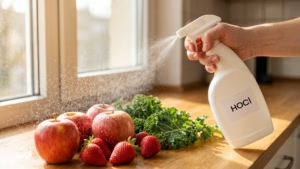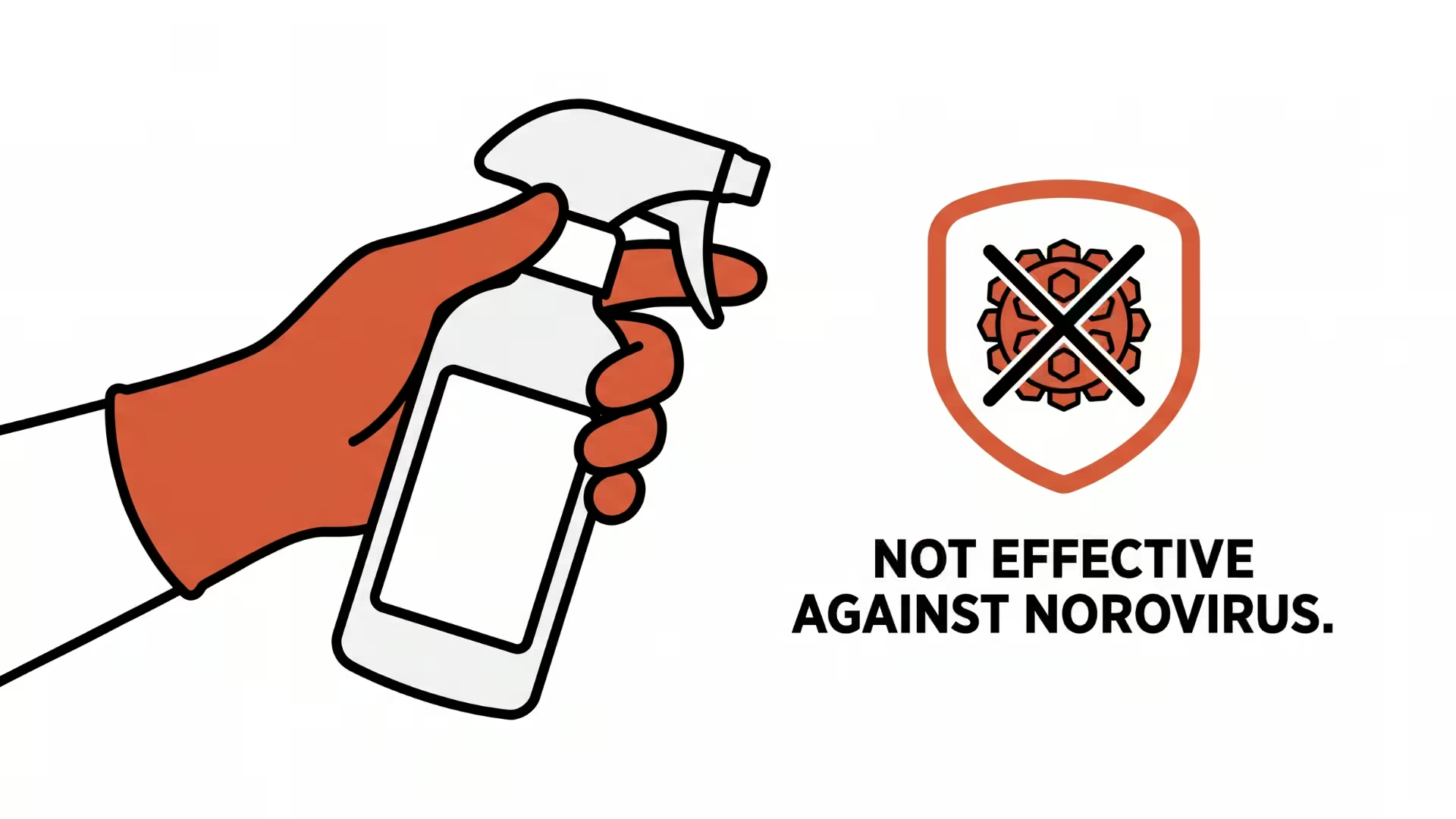
No, standard Dettol products aren’t proven or registered to kill norovirus. Its active ingredient, chloroxylenol, works well as a general surface cleaner against everyday bacteria, but it hasn’t been tested and approved against this particular virus. That gap matters if someone in your home just came down with a nasty stomach bug.
If you’re mid-cleanup right now, here’s the short version: reach for bleach or an EPA-registered disinfectant labeled for norovirus instead of your usual surface wipe.
If you’re mid-cleanup right now, here’s the short version: reach for bleach or an EPA-registered disinfectant labeled for norovirus instead of your usual surface wipe.
Key Takeaways
- Standard Dettol (chloroxylenol) isn't proven effective against norovirus and doesn't appear on the EPA's registered list for it.
- Bleach solutions and EPA List G disinfectants, including certain hypochlorous acid products, are what's validated to kill norovirus on surfaces.
- Norovirus spreads easily and can survive on surfaces for days, so proper cleanup and disinfection matter more than usual.
What Is Norovirus and Why Is It So Contagious?
Norovirus is a virus, not a bacteria, and it’s the most common cause of vomiting and diarrhea in the United States. It spreads through contaminated food, water, surfaces, and close contact with someone who’s infected. Just a handful of viral particles is enough to infect someone, which is part of what makes it so contagious.
Symptoms usually show up within 12 to 48 hours: sudden vomiting, watery diarrhea, stomach cramps, and sometimes a low-grade fever. Most people recover in a couple of days without needing medical care, but the virus can survive on hard surfaces for days, sometimes weeks, which is why the cleaner you use afterward matters.
Our full guide on what norovirus is and how it spreads covers the transmission routes in more depth.
Symptoms usually show up within 12 to 48 hours: sudden vomiting, watery diarrhea, stomach cramps, and sometimes a low-grade fever. Most people recover in a couple of days without needing medical care, but the virus can survive on hard surfaces for days, sometimes weeks, which is why the cleaner you use afterward matters.
Our full guide on what norovirus is and how it spreads covers the transmission routes in more depth.
Why Dettol Doesn't Make the Cut Against Norovirus?
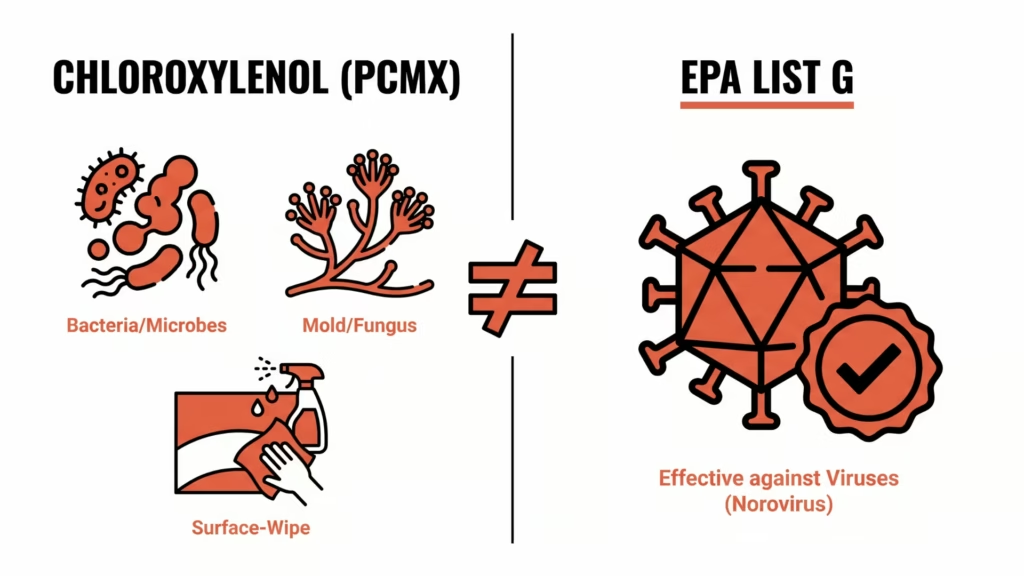
Dettol’s active ingredient is chloroxylenol (also called PCMX). Its safety data sheets show it’s formulated and tested primarily against bacteria and certain fungi, not the tough, non-enveloped virus norovirus happens to be. It doesn’t appear on the EPA’s List G, the official roster of products confirmed effective against norovirus.
That list is the real benchmark. The EPA only adds a product after lab data proves it kills the virus, tested using feline calicivirus, a safe stand-in for human norovirus.
Compare that to hydrogen peroxide or hypochlorous acid (HOCl), both of which show up on the registered list. Hypochlorous acid has been shown to kill norovirus in peer-reviewed testing, unlike chloroxylenol.
That list is the real benchmark. The EPA only adds a product after lab data proves it kills the virus, tested using feline calicivirus, a safe stand-in for human norovirus.
Compare that to hydrogen peroxide or hypochlorous acid (HOCl), both of which show up on the registered list. Hypochlorous acid has been shown to kill norovirus in peer-reviewed testing, unlike chloroxylenol.

What Actually Kills Norovirus on Surfaces?
The CDC is direct here. To disinfect after a norovirus incident, use a chlorine bleach solution or an EPA-registered product with a norovirus claim on the label. A practical order of operations:
- Contain it fast. Gloves on, paper towels down. Bag it and seal it.
- Clean first. Soap and hot water to remove visible mess. Disinfectant struggles to work through organic material.
- Disinfect properly. For a homemade bleach solution, mix 5 to 25 tablespoons of household bleach (5% to 8%) per gallon of water, roughly 1,000 to 5,000 ppm available chlorine, and leave it wet on the surface for at least 5 minutes.
- Rinse and dry. Anything that touches food or mouths gets a plain water rinse afterward.
- Handle laundry separately. Hottest safe setting, then machine dry.
Bleach works, but it’s harsh. It can damage fabrics, irritate skin and eyes, and shouldn’t be mixed with other cleaners. This is where hypochlorous acid makes more sense for everyday households, since HOCl-based disinfectants appear on the EPA’s registered list for norovirus without the fumes or staining that come with straight bleach.
Worth a read if you’re new to what hypochlorous acid actually is.
Hand Sanitizer Won't Save You Either
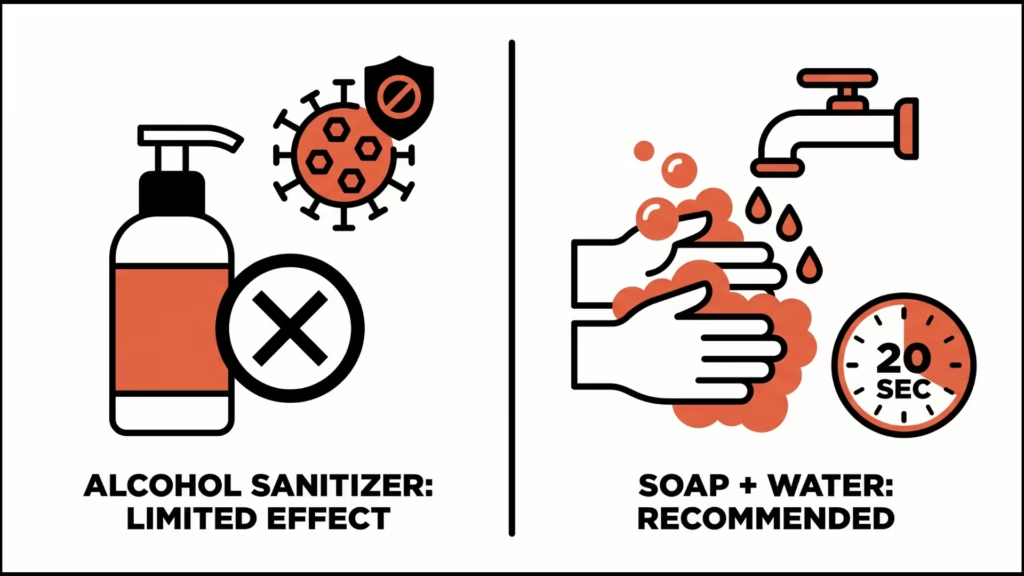
This one surprises a lot of people. Alcohol-based hand sanitizer does very little against norovirus. Dr. Michelle Barron , an infection prevention specialist at UCHealth, has pointed out that norovirus particles are tough enough to shrug off the alcohol in typical sanitizers. The virus’s outer shell (called a capsid) just doesn’t break down the way it does for bacteria or more fragile viruses.
What actually works is washing hands with soap and water for at least 20 seconds, especially after using the toilet, changing a diaper, or before handling food. Certain HOCl-based sanitizers hold up against norovirus better than alcohol, but don’t let any hand sanitizer replace proper handwashing during an outbreak at home.
What actually works is washing hands with soap and water for at least 20 seconds, especially after using the toilet, changing a diaper, or before handling food. Certain HOCl-based sanitizers hold up against norovirus better than alcohol, but don’t let any hand sanitizer replace proper handwashing during an outbreak at home.
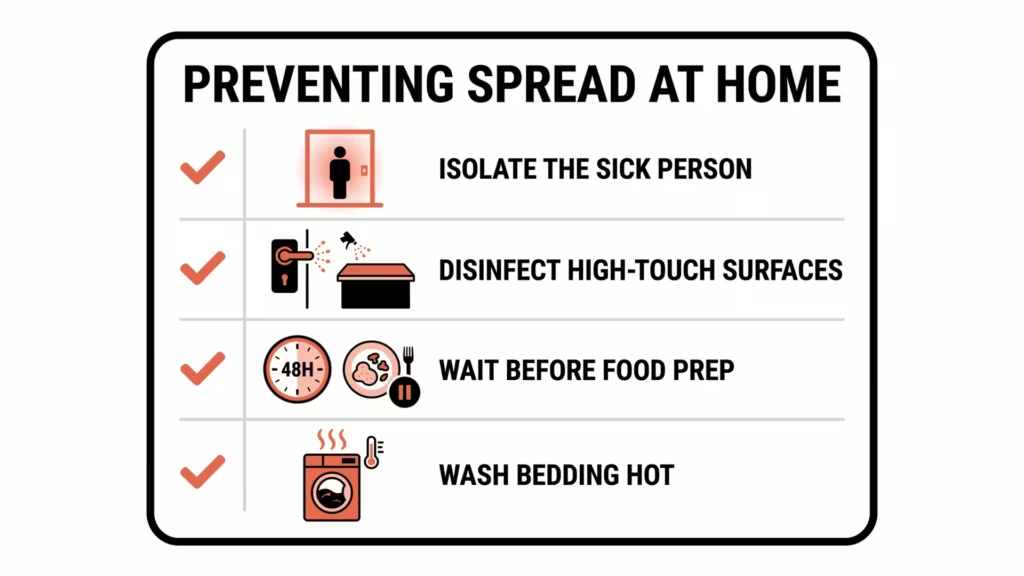
Preventing Norovirus Spread in Your Home
A few habits go a long way toward stopping the spread once it’s in your house:
- Isolate the sick person, avoid shared utensils
- Disinfect high-touch surfaces daily: doorknobs, light switches, countertops
- Avoid preparing food for others until 48 hours symptom-free
- Wash bedding and soiled clothing at the hottest safe temperature
Norovirus tends to spike in colder months when people spend more time indoors together, much like flu season, and the same layered approach helps with both.
The Bottom Line
Dettol isn’t a bad product, it’s just the wrong tool for this job. Chloroxylenol works fine on everyday germs, but norovirus needs a disinfectant that’s actually been tested and registered against it. Reach for bleach or an EPA-registered product instead, pair that with proper handwashing, and you’ll cut down the chances of it spreading through your household.
Frequently Asked Questions
Yes, chloroxylenol works against many common bacteria and some fungi. It just isn’t registered as effective against norovirus.
Products on the EPA’s List G, including certain bleach-based cleaners, hydrogen peroxide formulas, and hypochlorous acid disinfectants.
Up to 48 hours, which is why guidance recommends avoiding food prep for others during that window.
Yes. There are many strains, and having one doesn’t protect you from catching a different one later.
Check the label for an explicit norovirus claim, or look for “feline calicivirus,” which is the surrogate virus the EPA uses to test norovirus efficacy. If neither appears, the product likely wasn’t tested against it.