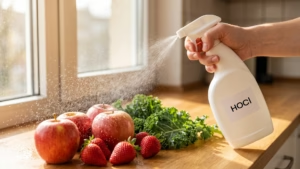
Hypochlorous acid (HOCl) is cleared by the FDA for minor wounds like scrapes, small cuts, and light burns, which makes it a genuinely useful thing to keep in a home first aid kit. It’s the kind of product that fits real life: the scraped knee from a bike fall, the nick from slicing vegetables, the scratch from pulling weeds. Nothing dramatic, just the small stuff that happens more often than any of us plan for.
It’s gentle enough to use on kids without a fight, and simple enough that you don’t need a medical background to use it right.
It’s gentle enough to use on kids without a fight, and simple enough that you don’t need a medical background to use it right.
Key Takeaways
- HOCl has FDA clearance for minor wounds: scrapes, small cuts, light burns, and everyday skin irritation.
- It doesn't sting, which matters a lot when the patient is a five-year-old.
- It's a better everyday fit than alcohol or hydrogen peroxide, which can actually slow healing with repeated use.
- It's meant for minor, superficial wounds, not deep cuts, punctures, or anything that needs stitches.
- No rinsing required after use, and many formulations are labeled safe for use near the eyes and face — always check the specific product.

The Kind of Wounds This Is (and Isn't) For
Let’s be clear about scope first, because this matters more than it sounds like it should. HOCl is built for minor, superficial wounds. Think playground scrapes, a kitchen knife nick, a scratch from the garden, a small burn from grabbing a hot pan.
What it’s not for: anything deep, anything that won’t stop bleeding after some firm pressure, puncture wounds, animal or human bites, or a wound with something embedded in it. Those need an actual medical professional, not a spray bottle. If a cut is gaping, over a joint, or longer than about an inch, that’s also a “see a doctor” situation rather than a “clean it and move on” one.
Most of what happens at home doesn’t fall into that category, though. It’s the everyday stuff, and that’s exactly where HOCl does its best work.
What it’s not for: anything deep, anything that won’t stop bleeding after some firm pressure, puncture wounds, animal or human bites, or a wound with something embedded in it. Those need an actual medical professional, not a spray bottle. If a cut is gaping, over a joint, or longer than about an inch, that’s also a “see a doctor” situation rather than a “clean it and move on” one.
Most of what happens at home doesn’t fall into that category, though. It’s the everyday stuff, and that’s exactly where HOCl does its best work.

Why Kids' Scrapes and Kitchen Nicks Are Different From "Textbook" Wounds
Most wound care advice online reads like it was written for a hospital, not a household. That makes sense for surgical incisions and post-op care. It makes a lot less sense for a seven-year-old who just fell off a scooter.
These everyday wounds have a few things in common that textbook first aid guides don’t always account for:
These everyday wounds have a few things in common that textbook first aid guides don’t always account for:
- They happen a lot. A kid who plays outside is going to scrape a knee more than once a summer. That means whatever you’re using needs to be something you can reach for without thinking twice.
- They’re usually dirty. Playground dirt, kitchen debris, garden soil. Cleaning matters more here than with a clean surgical cut, because there’s actual contamination to deal with.
- The patient often resists. Anyone who’s tried to clean a scraped knee with rubbing alcohol while a kid screams knows exactly what this means. Stinging antiseptics turn a thirty-second job into a five-minute negotiation.
This is really the gap HOCl fills. It’s not trying to replace what a hospital does for a surgical wound. It’s built for the ordinary, repeated, slightly messy reality of everyday cuts and scrapes.
What Makes Hypochlorous Acid a Good Fit for These Moments
A few things line up here that are worth knowing, especially if you’re comparing it to what’s probably already in your medicine cabinet.
It’s actually cleared for this. The FDA has cleared multiple branded HOCl formulations for topical wound management over the past decade, specifically for things like minor lacerations, scrapes, and burns on intact or lightly broken skin. This isn’t a wellness trend riding on vague claims. It went through an actual regulatory review process. It doesn’t sting. This sounds minor until you’re the one holding down a squirming toddler. HOCl sits at a near-neutral pH, close to what’s naturally on your skin, so it doesn’t cause the burning sensation that alcohol or iodine does.
It doesn’t slow healing the way some older options can. According to wound care guidance from UK HealthCare, continued use of rubbing alcohol or hydrogen peroxide on a healing wound can actually work against you over time, since both can damage the new tissue that’s trying to form. A single first clean might be fine, but repeated use is where the trouble starts. HOCl doesn’t carry that same tradeoff, which is part of why it shows up in hospital wound care as well as home first aid kits. No rinsing needed. Most formulations are designed to be sprayed or dabbed on and left there. That’s a small thing, but it matters when you’re dealing with a wound in an awkward spot or a kid who wants to go back outside and play.
If you’re picking one up, look for language on the label like “FDA cleared for minor wounds” or “first aid antiseptic.” A HOCl product made for surface cleaning or produce washing is a different formulation and concentration entirely, so it’s worth checking that what you’re buying is actually labeled for skin and wound use.
It’s actually cleared for this. The FDA has cleared multiple branded HOCl formulations for topical wound management over the past decade, specifically for things like minor lacerations, scrapes, and burns on intact or lightly broken skin. This isn’t a wellness trend riding on vague claims. It went through an actual regulatory review process. It doesn’t sting. This sounds minor until you’re the one holding down a squirming toddler. HOCl sits at a near-neutral pH, close to what’s naturally on your skin, so it doesn’t cause the burning sensation that alcohol or iodine does.
It doesn’t slow healing the way some older options can. According to wound care guidance from UK HealthCare, continued use of rubbing alcohol or hydrogen peroxide on a healing wound can actually work against you over time, since both can damage the new tissue that’s trying to form. A single first clean might be fine, but repeated use is where the trouble starts. HOCl doesn’t carry that same tradeoff, which is part of why it shows up in hospital wound care as well as home first aid kits. No rinsing needed. Most formulations are designed to be sprayed or dabbed on and left there. That’s a small thing, but it matters when you’re dealing with a wound in an awkward spot or a kid who wants to go back outside and play.
If you’re picking one up, look for language on the label like “FDA cleared for minor wounds” or “first aid antiseptic.” A HOCl product made for surface cleaning or produce washing is a different formulation and concentration entirely, so it’s worth checking that what you’re buying is actually labeled for skin and wound use.

Everyday Scenarios Where It Helps
A few places this tends to come up more than people expect:
- The playground scrape. Dirt, gravel, a little bit of blood. A quick clean and a spray gets it handled without the drama.
- The kitchen nick. Chopping vegetables and slipping is one of the most common small injuries in any home. HOCl handles the bacteria concern from a kitchen environment without adding sting to an already annoying moment.
- The garden scratch. Thorns, soil, and outdoor debris make garden scrapes a little dirtier than average, which is exactly the kind of situation a mild antiseptic is meant for.
- A minor sunburn or small kitchen burn. Light burns benefit from something that calms the skin rather than irritating it further, which rules out a lot of harsher options.
- After removing a splinter. Once the splinter’s out, a quick clean of the area helps keep things from getting irritated further.

How to Use It in the Moment
Nothing complicated here, which is really the point.
- If there’s visible dirt or debris, rinse the area gently with clean water first.
- Spray or apply the HOCl solution directly to the wound.
- Let it sit, no wiping or rinsing needed.
- Cover with a bandage if the spot is prone to friction or getting dirty again, like a knee or an elbow.
- Reapply during dressing changes, once or twice a day is typical for most minor wounds.
That’s genuinely most of it. It’s meant to be simple enough that it doesn’t become its own chore.

Signs a "Minor" Wound Needs More Than Home Care
Most scrapes and small cuts heal on their own with basic care. But it’s worth knowing the signs that something’s moved past what a home routine can handle:
- Redness that’s spreading outward instead of fading
- Increasing warmth, swelling, or pain a couple of days in, instead of gradual improvement
- Pus or unusual discharge
- A fever that shows up alongside the wound
- A wound that hasn’t started closing after several days
If any of that shows up, it’s time for a doctor rather than more home treatment. Trust that instinct if something feels off, even if it’s hard to pin down exactly why.
Frequently Asked Questions
Yes, it’s commonly used for children specifically because it doesn’t sting and is gentle on sensitive skin, including near the face.
No. It’s formulated at a near-neutral pH, so most people feel little to nothing when it’s applied, which is a big part of why it’s popular for kids.
Once or twice daily is typical, usually alongside dressing changes, though it varies a bit by product label.
Not necessarily. It cleans and helps reduce bacteria on the wound, but some people still use a thin layer of antibiotic ointment afterward. Check with a pharmacist or doctor if you’re unsure what’s right for a specific wound.
Many HOCl formulations are labeled safe for use near the eyes and eyelids, but always check the specific product’s label, since concentrations vary.
No. Surface and produce-wash formulations are made for different purposes and concentrations. Stick to products specifically labeled for skin or wound care.