
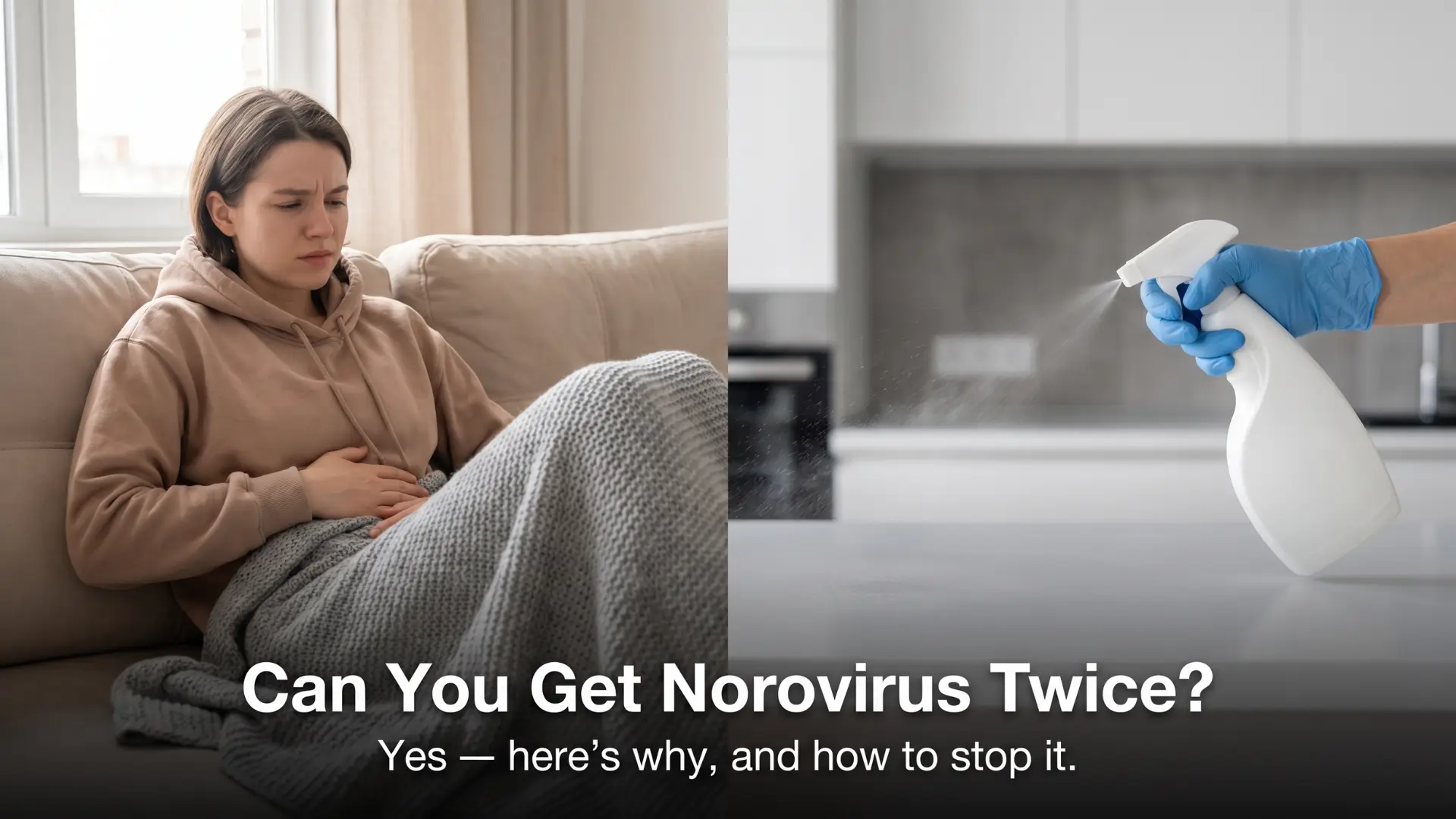
The short answer is yes. You can get norovirus more than once, and catching it twice in a row is more common than most people realize. Unlike some infections that leave you with lasting protection, norovirus doesn’t play by those rules.
There are many strains of this virus circulating at any given time. Getting sick with one offers little to no defense against the others, which is exactly why reinfection catches so many people off guard.
There are many strains of this virus circulating at any given time. Getting sick with one offers little to no defense against the others, which is exactly why reinfection catches so many people off guard.
Key Takeaways
- Getting a norovirus infection with one strain won't protect you against different strains
- Immunity tends to be short-lived, fading within months for some people
- The virus spreads easily through contaminated food, surfaces, and person-to-person contact
- Norovirus can survive on surfaces for days, which makes consistent hygiene non-negotiable
- Hypochlorous acid (HOCl) is a clinically supported, non-toxic disinfectant effective against norovirus - explore how it works here.
What Is Norovirus, Exactly?
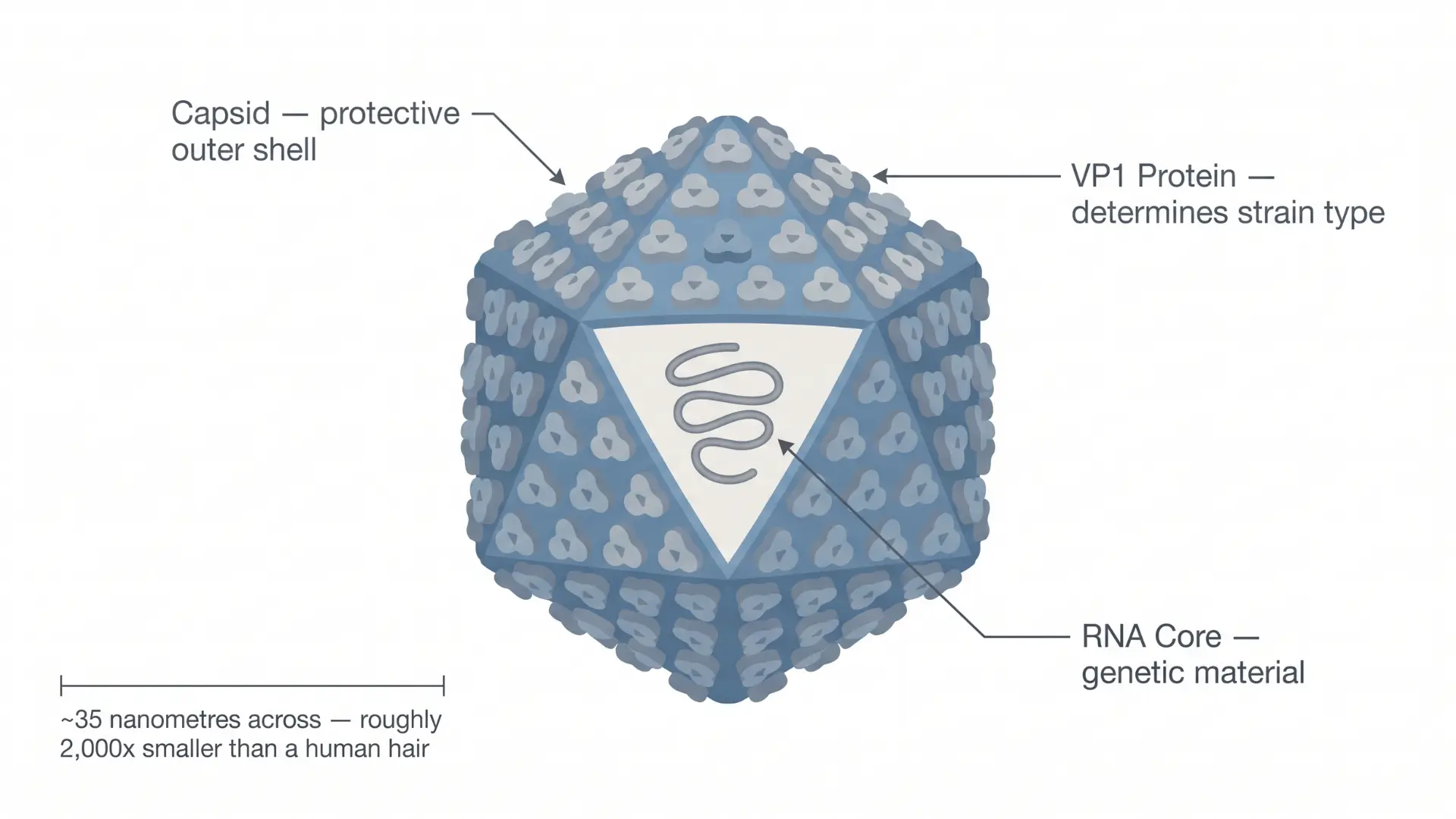
Norovirus is a highly contagious virus that causes inflammation of the stomach and intestines, a condition more formally known as gastroenteritis. Most people know it as the stomach flu, the stomach bug, or the winter vomiting bug, though it circulates year-round, not just in winter.
It’s also one of the leading causes of foodborne illness worldwide. According to the CDC, norovirus causes an estimated 685 million cases of acute gastroenteritis each year globally. That’s not a small number.
It’s also one of the leading causes of foodborne illness worldwide. According to the CDC, norovirus causes an estimated 685 million cases of acute gastroenteritis each year globally. That’s not a small number.
Why Can You Get Norovirus More Than Once?
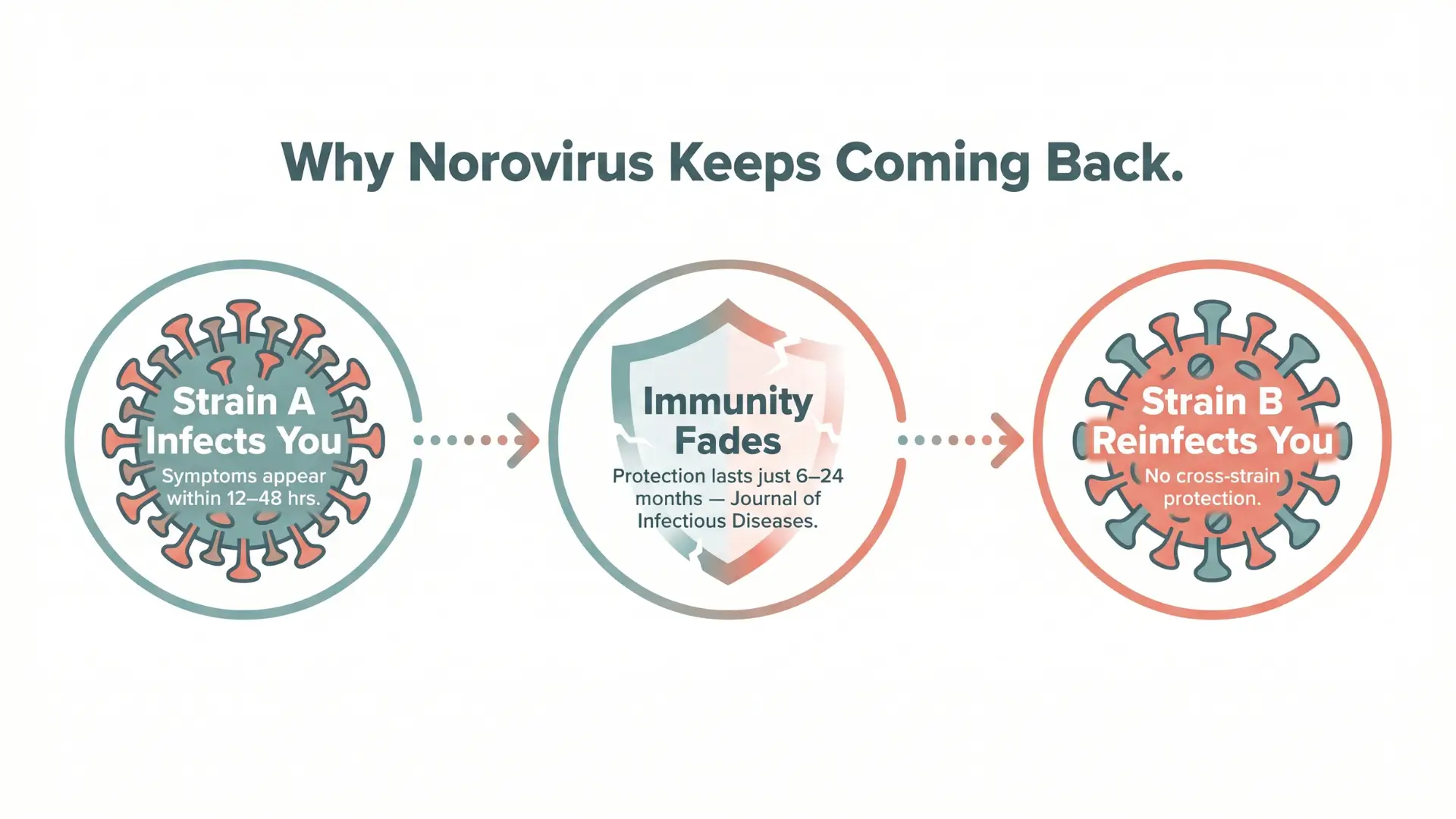
This is where things get a bit frustrating. There isn’t just one norovirus strain out there. There are many, and infection with one strain produces only short-lived, strain-specific immunity. Your immune system learns to fight off the strain it encountered, but a different strain can still infect you just as easily as if it were your first exposure.
Research published in the Journal of Infectious Diseases suggests that immunity from a norovirus infection may begin to wane within six months to two years, varying by person. People with weakened immune systems tend to recover more slowly and appear to face a higher risk of reinfection.
So getting norovirus multiple times in a single year? It’s not unusual at all. It’s just how this particular virus works.
Research published in the Journal of Infectious Diseases suggests that immunity from a norovirus infection may begin to wane within six months to two years, varying by person. People with weakened immune systems tend to recover more slowly and appear to face a higher risk of reinfection.
So getting norovirus multiple times in a single year? It’s not unusual at all. It’s just how this particular virus works.
Symptoms of Norovirus Infection
Symptoms of norovirus typically appear within 12 to 48 hours of exposure. Most people experience:
If someone cannot keep fluids down or shows signs of severe dehydration such as dizziness, dark urine, or a dry mouth, that warrants a visit to a clinic or urgent care center.
- Sudden vomiting and diarrhea (often the first sign something is wrong)
- Nausea and stomach cramps
- Low-grade fever and general fatigue
- Dehydration, which is the most serious complication, especially in young children, older adults, and those with compromised immune systems
If someone cannot keep fluids down or shows signs of severe dehydration such as dizziness, dark urine, or a dry mouth, that warrants a visit to a clinic or urgent care center.
How Contagious Is Norovirus, Really?
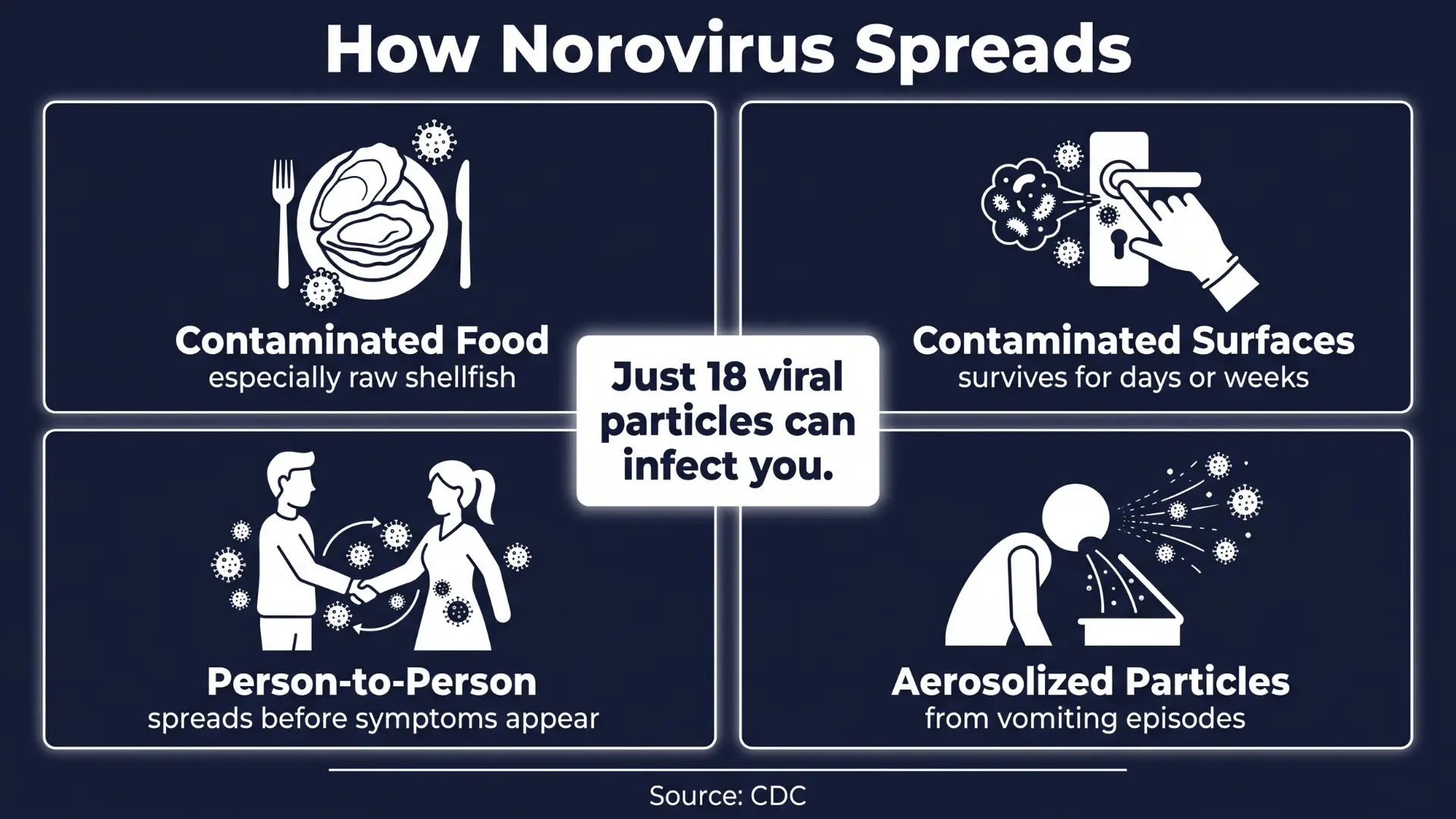
Very. The CDC estimates it takes as few as 18 viral particles to infect a person. For context, an infected person can shed billions of particles at a time.
Norovirus spreads easily through:
cruise ships, nursing homes, schools, and hospitals. The virus spreads before many people even realize they’re sick, which is what makes it so difficult to contain.
- Contaminated food, especially raw shellfish like oysters
- Contaminated surfaces, since norovirus can survive on surfaces for days or even weeks under certain conditions
- Close contact with an infected person, including caring for someone who is sick
- Aerosolized particles from vomiting episodes, which can briefly contaminate nearby surfaces and objects
cruise ships, nursing homes, schools, and hospitals. The virus spreads before many people even realize they’re sick, which is what makes it so difficult to contain.
How to Prevent the Spread of Norovirus
Good hygiene remains the most practical line of defense. A few things that genuinely help:
- Wash your hands with soap and water, especially after using the bathroom and before handling food. Alcohol-based hand sanitizers are considerably less effective against norovirus, so soap and water is the stronger choice here.
- Stay home for at least 48 hours after symptoms stop. You can still spread the virus to others even after feeling better.
- Avoid preparing food for others while sick and for at least two days after recovery.
- And then there’s surface disinfection, which is where most people fall short.
Why Surface Disinfection Matters More Than You Think
Norovirus doesn’t just spread person to person. It lingers. The virus can survive on contaminated surfaces for days, sometimes weeks, meaning a kitchen counter, a door handle, or a shared bathroom can silently reinfect an entire household.
The problem is that most standard household cleaners aren’t formulated to kill norovirus effectively. You need something that can actually penetrate the viral structure, not just wipe away visible dirt.
So what actually works?
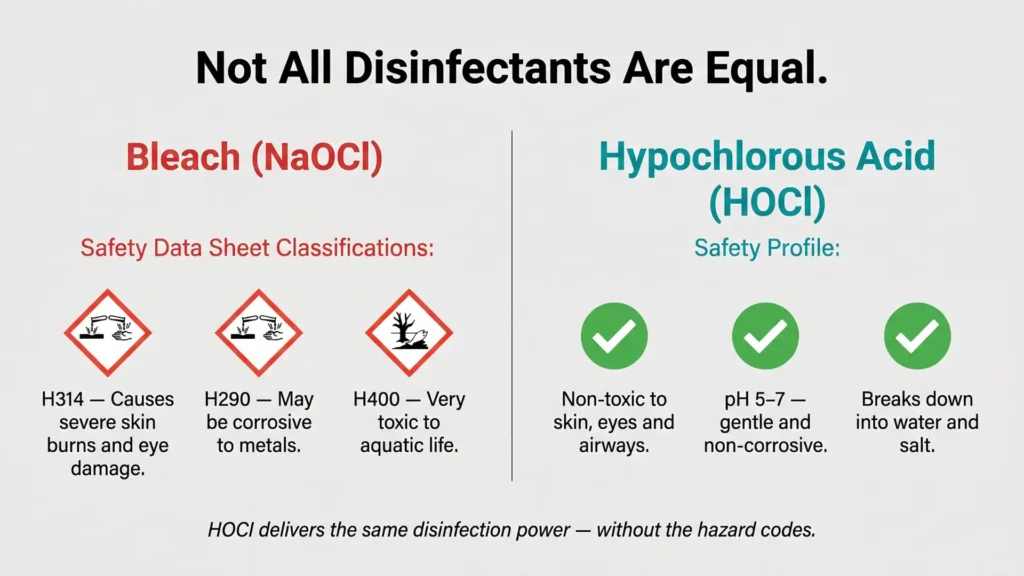
Bleach-based solutions (sodium hypochlorite) are often cited as effective against norovirus, and they can be. But they come with significant drawbacks. According to the sodium hypochlorite Safety Data Sheet, NaOCl carries hazard classifications including H314 (causes severe skin burns and eye damage), H290 (may be corrosive to metals), and H400 (very toxic to aquatic life). It’s not something you’d want to spray around a kitchen, a child’s play area, or on soft surfaces regularly.
NaDCC tablets, another common disinfectant, carry similar concerns: H302 (harmful if swallowed) and H400 (very toxic to aquatic life), making them unsuitable for everyday household use around children or pets.
The problem is that most standard household cleaners aren’t formulated to kill norovirus effectively. You need something that can actually penetrate the viral structure, not just wipe away visible dirt.
So what actually works?
Bleach-based solutions (sodium hypochlorite) are often cited as effective against norovirus, and they can be. But they come with significant drawbacks. According to the sodium hypochlorite Safety Data Sheet, NaOCl carries hazard classifications including H314 (causes severe skin burns and eye damage), H290 (may be corrosive to metals), and H400 (very toxic to aquatic life). It’s not something you’d want to spray around a kitchen, a child’s play area, or on soft surfaces regularly.
NaDCC tablets, another common disinfectant, carry similar concerns: H302 (harmful if swallowed) and H400 (very toxic to aquatic life), making them unsuitable for everyday household use around children or pets.
This is where Hypochlorous Acid (HOCl) stands apart.
HOCl is naturally produced by white blood cells in the human body as part of the immune response to infection. Produced through a simple process of electrolyzing water and salt, it’s:
- Non-toxic if inhaled, ingested, or contacted by skin or eyes
- Non-corrosive to metals, plastics, and surfaces
- pH neutral (between 5 and 7), making it non-irritating unlike alkaline bleach solutions
- Effective against a broad spectrum of pathogens, including viruses like norovirus
- Free of harmful residues, decomposing naturally into water and salt after use
For households that have been through a norovirus outbreak, thorough disinfection of all contaminated surfaces with an effective solution is one of the most important steps in preventing reinfection. HOCl makes that process safer and more practical.
Same-Day Norovirus Treatment: What Actually Helps
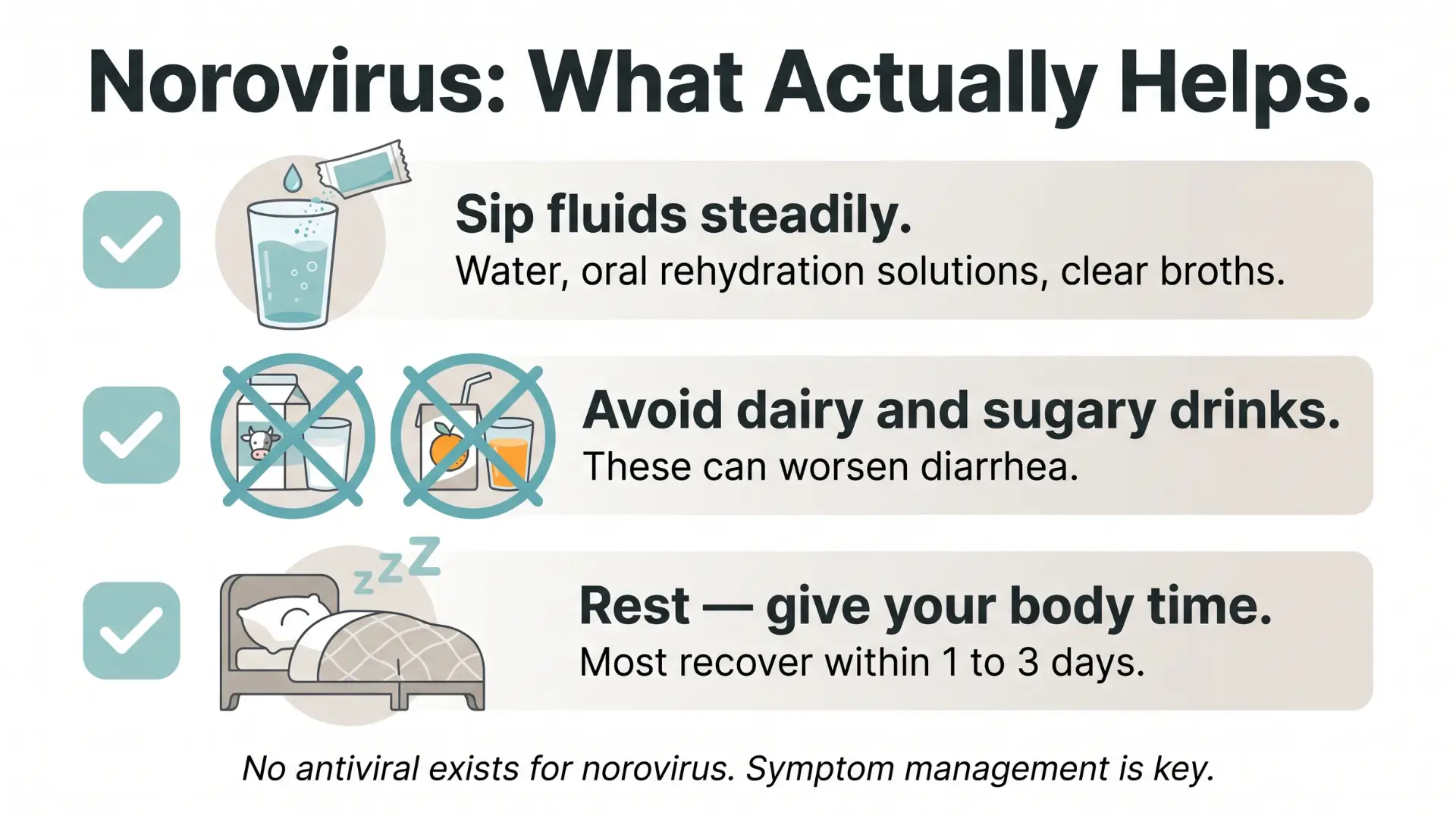
There’s no antiviral medication for norovirus. Treatment focuses on managing symptoms and preventing dehydration. Here’s what tends to help:
- Sip fluids steadily: water, oral rehydration solutions, and clear broths are solid options
- Avoid sugary drinks and dairy while symptomatic, as these can worsen diarrhea
- Rest and give your body time to recover
Frequently Asked Questions
Yes. If you’re exposed to a different norovirus strain shortly after recovering from one, you can get ill again. Immunity from infection with one strain is short-lived and strain-specific.
Immunity appears to last anywhere from a few months to around two years, varying by person and strain.
It’s possible, but unlikely without strict hygiene. Anyone can get infected through contact with contaminated surfaces or an infected person. The virus spreads easily enough that casual exposure is often sufficient.
No. The CDC recommends soap and water over alcohol-based hand sanitizers for norovirus, as alcohol is considerably less effective against this particular virus.
Yes, and it happens regularly. Infection with one strain doesn’t protect against others, and immunity fades relatively quickly.
Based on available evidence, HOCl has demonstrated effectiveness against a broad range of pathogens, including viruses. Read more about HOCl and norovirus here
The Bottom Line:
Norovirus is one of those infections that keeps finding ways back in. With many strains, short-lived immunity, and a virus that spreads with minimal contact, reinfection is both possible and common. Consistent hand hygiene, staying home when sick, and properly disinfecting contaminated surfaces are the most reliable defenses.
On the disinfection front, not all products are equal. Bleach works but brings real risks to skin, surfaces, and the environment. HOCl offers a safer, equally capable alternative that suits everyday use in homes, kitchens, and care environments alike.
On the disinfection front, not all products are equal. Bleach works but brings real risks to skin, surfaces, and the environment. HOCl offers a safer, equally capable alternative that suits everyday use in homes, kitchens, and care environments alike.


