
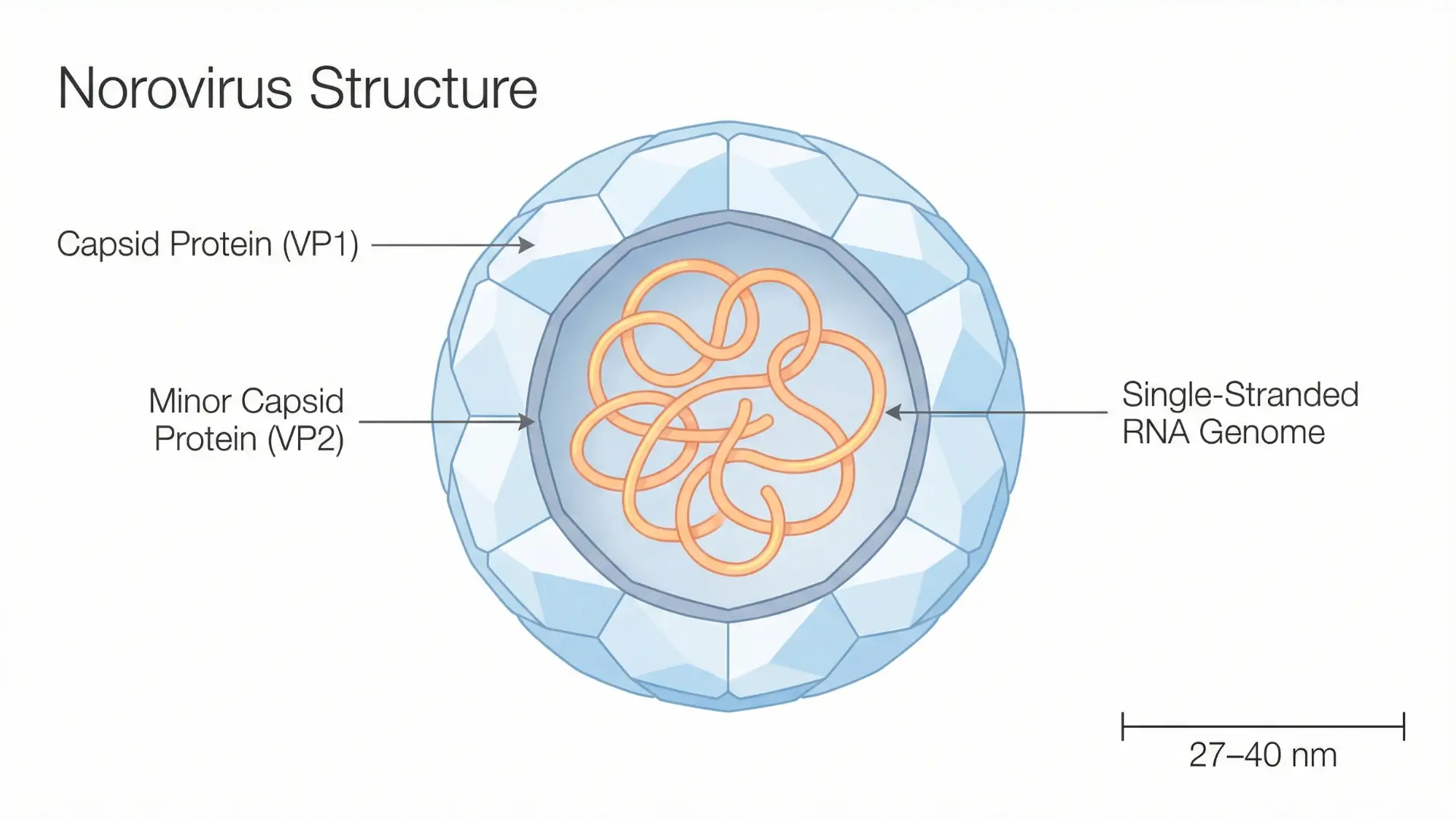

What Exactly Is Norovirus?
According to the Centers for Disease Control and Prevention, norovirus is the leading cause of vomiting and diarrhea in the United States, responsible for roughly 19 to 21 million illnesses every year. It’s also a significant driver of foodborne illness, affecting people across all age groups in virtually every setting.
A Brief History
Because the virus mutates frequently, immunity tends to be short-lived, which is why the same person can get sick with norovirus more than once.

Symptoms of Norovirus
- Intense nausea
- Vomiting — sometimes many times a day
- Diarrhea
- Stomach cramps
- Low-grade fever, chills, or body aches in some cases
There is no specific treatment for norovirus. Antibiotics don’t work — again, it’s a virus. The focus is on fluid replacement and oral rehydration therapy to prevent dehydration. A norovirus infection usually resolves on its own, and symptoms usually last 1 to 3 days, though it rarely feels brief while it’s happening.

How Contagious Is Norovirus?
- Direct contact with someone who has norovirus
- Contaminated food or water — shellfish like oysters are a particularly common source
- Touching contaminated surfaces (door handles, countertops, linens) and then touching the mouth
- Airborne particles released when an infected person vomits
What many people don’t realise is that a person is most contagious when symptoms are active, but the virus doesn’t stop shedding when symptoms do. Someone may still be contagious for two weeks after recovering — which is also why anyone sick with norovirus should not prepare food for others until well past the point of feeling better.
How Fast Does Norovirus Hit After Exposure?
Norovirus can survive on surfaces for days, which is part of what makes it so difficult to contain once an outbreak has started. Unlike many pathogens, it’s also resistant to a range of standard cleaning products — which is why disinfectant choice actually matters.

Preventing Norovirus: What Actually Works?
Wash your hands thoroughly with soap and water — especially after using the toilet, changing diapers, and before preparing food. Hand sanitizer is not reliably effective against norovirus, so soap and water is the only real option here.
For surfaces, a regular wipe-down isn’t enough. To help prevent the spread of norovirus, you need a disinfectant that’s actually capable of killing norovirus on contact. This matters most in high-risk environments: childcare centres, nursing homes, hospital wards, commercial kitchens.
Hypochlorous acid (HOCl) has become a recognised option in this space. It’s effective against a broad range of pathogens including norovirus, and unlike bleach-based disinfectants, it’s non-toxic and safe to use around people and food contact surfaces — making it a practical choice for environments where continuous sanitisation is needed without chemical risk.
Beyond disinfection, the basics still count:
- Isolate anyone who is sick
- Wash contaminated clothing and linens promptly
- Ensure food handlers stay home until fully recovered
- Prepare food safely, especially shellfish from clean water sources
Norovirus spreads quickly, hits hard, and doesn’t care where you are. But most infections are preventable with the right hygiene habits in place — and for most healthy people, recovery is full and comes within a few days. The more you understand about how it spreads, the better placed you are to stop it from spreading further.
Frequently Asked Questions
Not exactly — but it’s more complicated than a simple no. Norovirus is not airborne in the strict sense; you can’t catch it simply by breathing the same air as someone infected. However, if someone nearby vomits, the spray can release millions of viral particles into the air, which may then be inhaled or settle on surfaces. The real risk comes from touching contaminated surfaces and then touching your mouth — which is why hygiene in shared spaces matters so much during an outbreak.
Yes — and fairly easily. Researchers aren’t sure exactly how long immunity lasts after infection, with estimates ranging from several months to potentially years depending on the study. What complicates things further is that there are dozens of circulating variants, and immunity to one doesn’t protect against another. GII.4, which caused most outbreaks for over a decade, is especially prone to genetic changes, meaning people can be reinfected by different versions of the same strain.
The symptoms overlap heavily — both cause vomiting, diarrhea, and stomach cramps. The clearest distinguishing factor is usually source and timing. Food poisoning typically has an identifiable source and symptoms may appear within hours of eating the contaminated food. Norovirus, on the other hand, spreads person-to-person and through surfaces, and has a 12 to 48 hour incubation window. If others around you — who didn’t share the same meal — are getting sick too, norovirus is the more likely explanation.
Recovered doesn’t necessarily mean no longer contagious. Even after symptoms clear, a person can continue shedding norovirus through stool for up to two weeks, which means they can still spread the virus through contaminated surfaces. Basic hygiene — thorough handwashing, disinfecting shared surfaces with HOCL, and avoiding food preparation, should continue during this window, particularly if vulnerable individuals are in the household.
For most healthy adults, no — norovirus is unpleasant but resolves on its own. In the US, however, norovirus causes approximately 900 deaths annually, mostly among adults aged 65 and older, along with around 109,000 hospitalisations each year. Death is almost always linked to severe dehydration in people who are already medically fragile, which is why early fluid replacement is so important in high-risk groups.


