
Norovirus is remarkably common. Globally, it’s estimated to cause around 685 million cases of acute gastroenteritis every year, making it one of the most widespread infectious diseases on the planet. It doesn’t discriminate by age, geography, or season.
Key Takeaways
- Norovirus is the leading cause of vomiting and diarrhea from acute gastroenteritis worldwide
- Outbreaks occur year-round, though they're most common from November to April in temperate regions
- It spreads fast in close quarters environments like nursing homes, cruise ships, and care facilities
- Infected people spread the virus to others through contaminated food, water, and surfaces
- Washing hands with soap and water for at least 20 seconds remains the most reliable prevention method
- Hand sanitizers alone are not reliably effective against norovirus
What Is Norovirus?
Norovirus is a highly contagious virus that causes inflammation of the stomach and intestines, a condition known as gastroenteritis (or what most people just call a stomach bug). It’s not related to the flu, even if both can feel equally miserable.
What makes it so efficient at spreading is its incredibly low infectious dose. Research suggests that as few as 18 viral particles may be enough to make a person sick, though exact figures can vary by strain and individual immune response. That’s a small amount for such a disruptive illness. For a full breakdown of what norovirus is, its symptoms, and how it spreads, our detailed guide covers it all.
What makes it so efficient at spreading is its incredibly low infectious dose. Research suggests that as few as 18 viral particles may be enough to make a person sick, though exact figures can vary by strain and individual immune response. That’s a small amount for such a disruptive illness. For a full breakdown of what norovirus is, its symptoms, and how it spreads, our detailed guide covers it all.

Just How Common Is Norovirus Worldwide?
Very. An estimated 685 million people are affected annually, according to research published in The Lancet Infectious Diseases. Of those, roughly 200 million cases occur in children under five, where the risk of serious dehydration is especially high.
Norovirus can happen any time of year. That said, it’s most common from November to April in countries with temperate climates, which is why some researchers informally call it “winter vomiting disease.”
Norovirus can happen any time of year. That said, it’s most common from November to April in countries with temperate climates, which is why some researchers informally call it “winter vomiting disease.”

How Do Norovirus Outbreaks Occur?
Infected people spread the virus to others through several routes:
- Person-to-person contact in close quarters settings
- Contaminated food or water, particularly raw shellfish like oysters
- Touching contaminated surfaces and then touching the mouth or face
- Aerosolized particles from vomiting in enclosed spaces. If you’ve ever wondered whether norovirus is airborne, the answer is more nuanced than most people think.
Common Settings Where Norovirus Outbreaks Are Reported
Norovirus outbreaks occur most frequently in environments where people share facilities and food. The most common settings include:
- Long-term care facilities and nursing homes (the single most commonly reported setting globally)
- Cruise ships, which account for a disproportionate share of media coverage largely because they’re closely monitored
- Hospitals and healthcare facilities
- Schools and childcare centers
- Restaurants, especially when food workers are ill
Who Is Most at Risk?
Norovirus illness can affect people of all ages. That said, certain groups face a greater risk of serious complications:
- Older adults (65+), who are more vulnerable to dehydration
- Young children, particularly under five
- Immunocompromised individuals, whose bodies may take longer to clear the infection
Norovirus as a Leading Cause of Foodborne Illness
Norovirus is the leading cause of foodborne illness globally, responsible for an estimated 125 million foodborne norovirus illness cases each year. It accounts for a substantial share of all gastrointestinal illness linked to food, ahead of many bacterial pathogens.
The highest-risk foods are raw or undercooked oysters and other shellfish, which can concentrate the virus from contaminated water. Fruits and vegetables irrigated with contaminated water are also a recognized exposure route. People often confuse this with standard food poisoning. For a closer look at norovirus versus food poisoning, the differences matter more than most realize.
The highest-risk foods are raw or undercooked oysters and other shellfish, which can concentrate the virus from contaminated water. Fruits and vegetables irrigated with contaminated water are also a recognized exposure route. People often confuse this with standard food poisoning. For a closer look at norovirus versus food poisoning, the differences matter more than most realize.
Common Symptoms of Norovirus
Symptoms of norovirus typically appear within 12 to 48 hours of exposure and include:
- Sudden vomiting and diarrhea
- Stomach cramping and nausea
- Low-grade fever or chills (less common)

How to Prevent Norovirus?
Wash your hands. This is still the most effective single action you can take.
Use soap and water for at least 20 seconds, especially after using the bathroom, before handling food, and after caring for someone who is ill. Hand sanitizers are not fully effective against norovirus and should not replace proper handwashing.
A few other practical steps worth following:
A few other practical steps worth following:
- Cook oysters and other shellfish thoroughly
- Wash fruits and vegetables before preparation
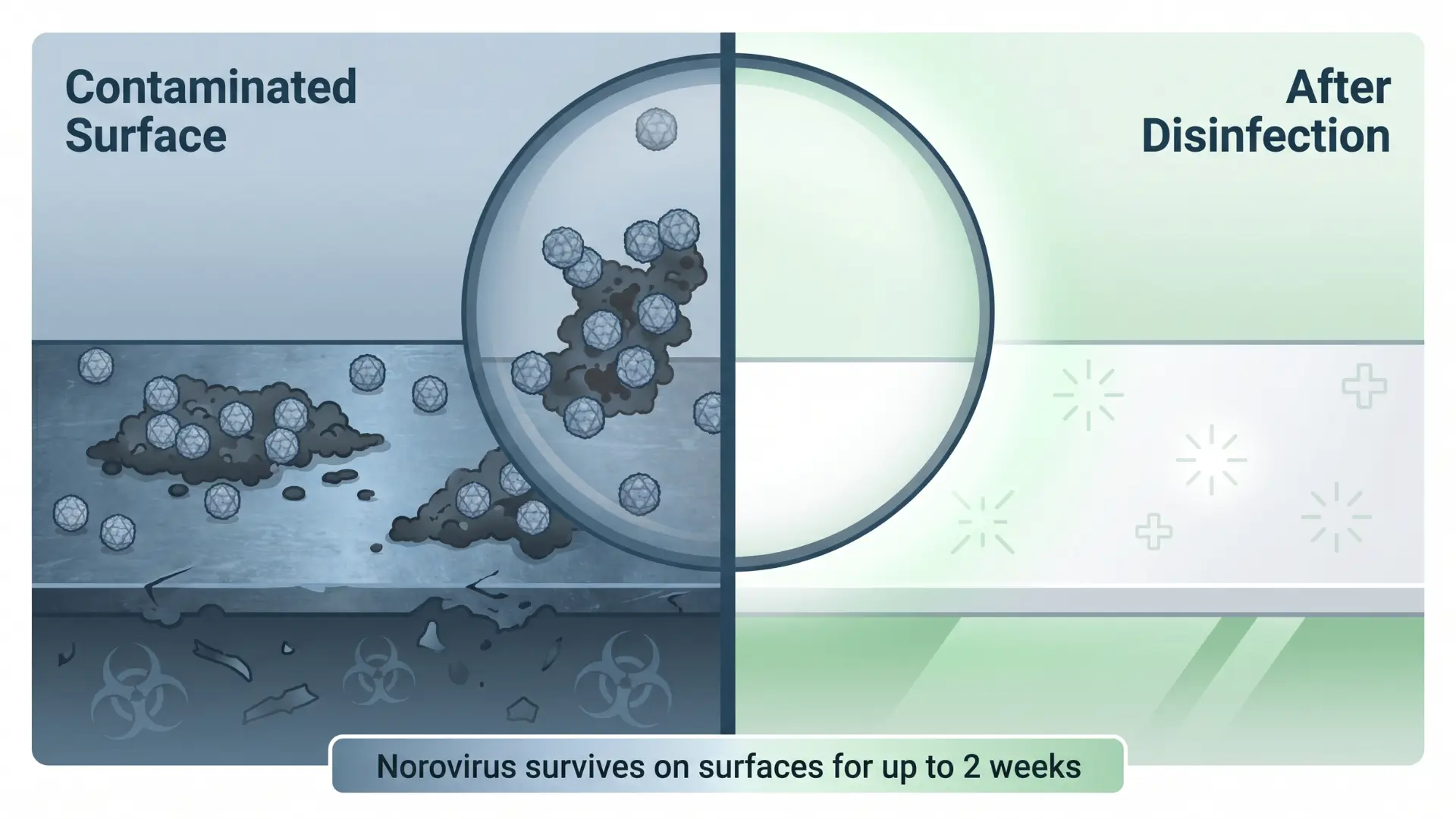
- Disinfect contaminated surfaces with a product proven effective against norovirus
Research consistently shows that surface disinfection plays a meaningful role in controlling norovirus outbreaks, particularly in care facilities and food service environments.

Can HOCl Help Against Norovirus?
Surface disinfection matters. Hypochlorous acid (HOCl) has gained attention as a non-toxic, effective disinfectant that works without the harsh residues associated with bleach or conventional sanitizers.
Unlike many alcohol-based sanitizers, HOCl is effective against a broader range of pathogens without damaging surfaces or posing risks to skin. For a deeper breakdown, see Does Hypochlorous Acid Kill Norovirus? for the full picture on how HOCl performs against this particular virus.
Unlike many alcohol-based sanitizers, HOCl is effective against a broader range of pathogens without damaging surfaces or posing risks to skin. For a deeper breakdown, see Does Hypochlorous Acid Kill Norovirus? for the full picture on how HOCl performs against this particular virus.
Frequently Asked Questions
Fairly likely over a lifetime. Most people will experience at least one norovirus infection. And since immunity after infection appears to be short-lived and strain-specific, getting norovirus twice is entirely possible, even if the second time tends to be milder.
Norovirus has likely always been this prevalent. Improved outbreak surveillance, international travel, and population density in urban and care settings may make it appear more prominent today.
Rarely dangerous for otherwise healthy adults, though it can be serious for older adults and young children due to dehydration. The acute discomfort is significant, but most people recover fully within a few days.
Norovirus outbreaks occur year-round. While they’re most concentrated during colder months, summer outbreaks are regularly reported in food service and care settings.
Norovirus is actually one of the leading causes of what people commonly call food poisoning. Foodborne norovirus illness spreads through contaminated food or water, not necessarily spoiled food.


