

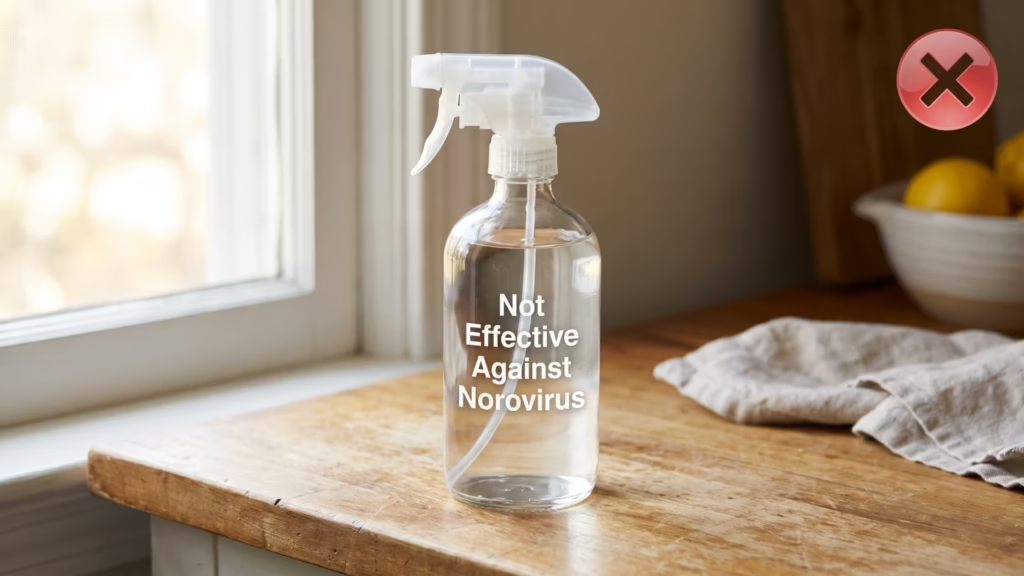
Vinegar does not kill norovirus. It’s a popular home remedy, and it works well enough for some bacteria, but norovirus is built differently and it takes a lot more than acetic acid to bring it down. If someone in your home has been struck down by this stomach bug, reaching for the white vinegar spray bottle may leave the virus alive on your surfaces for days.
The good news is there are proven, accessible options. This article breaks down why vinegar falls short, what the CDC actually recommends, and a safer alternative that most households haven’t considered yet.
The good news is there are proven, accessible options. This article breaks down why vinegar falls short, what the CDC actually recommends, and a safer alternative that most households haven’t considered yet.
Key Takeaways
- Vinegar does not kill norovirus and should not be used as a disinfectant after an outbreak.
- Norovirus is extremely contagious and can survive on hard surfaces like countertops, doorknobs, and light switches for days.
- Bleach-based disinfectants are the CDC-recommended approach for killing norovirus on surfaces.
- Washing hands with soap and warm water for at least 20 seconds is significantly more effective than hand sanitizer.
- Hypochlorous acid (HOCl) is an EPA-approved, non-toxic alternative to bleach that kills 99.99% of pathogens including norovirus.
Why Is Norovirus So Hard to Kill?
Norovirus is not your average stomach flu bug. Most viruses that cause illness have a lipid envelope (essentially a fatty outer layer) that disinfectants can dissolve. Norovirus doesn’t have one.
That bare, non-enveloped structure makes norovirus particles far more resistant to common cleaners and sanitizers. It’s one reason the virus remains extremely contagious at such low doses, as few as 18 viral particles can cause infection.
It also spreads in ways that catch people off guard:
It also spreads in ways that catch people off guard:
- Direct contact with a sick person
- Touching contaminated surfaces, then touching your face
- Eating food handled by someone dealing with norovirus
- Aerosolized particles from vomit (yes, even across a room)
And unlike many pathogens, norovirus on surfaces doesn’t break down quickly. It can survive on hard surfaces for days, sometimes weeks, depending on conditions. Worth knowing too: you can get norovirus more than once, immunity after infection is short-lived, which makes proper disinfection even more important. That’s why clean and disinfect isn’t just a phrase, the order actually matters.
Does Vinegar Disinfect Surfaces Against Norovirus?
Short answer: no.
Vinegar — white vinegar, apple cider vinegar, cleaning vinegar — all contain acetic acid, which does have some antimicrobial properties. It can tackle certain bacteria reasonably well, and it’s a decent deodorizer. But when it comes to norovirus, the evidence simply isn’t there.
A 2010 study published in the International Journal of Food Microbiology found that organic acids like acetic acid are ineffective against non-enveloped viruses such as norovirus. The virus’s structural resilience means that milder acids don’t penetrate or deactivate it. Vinegar isn’t on the EPA’s list of registered disinfectants for norovirus — and that list exists for a reason.
Vinegar — white vinegar, apple cider vinegar, cleaning vinegar — all contain acetic acid, which does have some antimicrobial properties. It can tackle certain bacteria reasonably well, and it’s a decent deodorizer. But when it comes to norovirus, the evidence simply isn’t there.
A 2010 study published in the International Journal of Food Microbiology found that organic acids like acetic acid are ineffective against non-enveloped viruses such as norovirus. The virus’s structural resilience means that milder acids don’t penetrate or deactivate it. Vinegar isn’t on the EPA’s list of registered disinfectants for norovirus — and that list exists for a reason.
Bottom line: If you’re dealing with norovirus in your home, vinegar won’t disinfect surfaces against it. Save it for salad dressing.
Curious about what vinegar can and can’t do? We’ve covered this in more detail in our full breakdown on whether vinegar disinfects.
What the CDC Recommends to Stop the Spread of Norovirus?
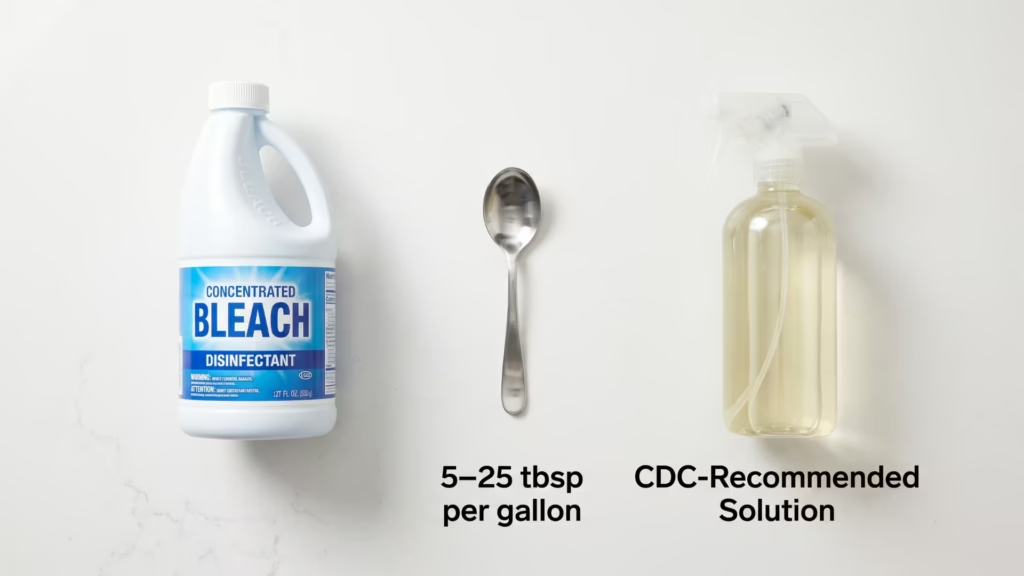
The Centers for Disease Control and Prevention recommends chlorine bleach (sodium hypochlorite) as the primary disinfectant for norovirus. It’s not glamorous, but it works.
The CDC’s recommended bleach and water solution for hard surfaces is 5 to 25 tablespoons of household bleach per gallon of water — with the stronger end of that range used for areas contaminated by vomit or diarrhea.
A few things worth noting about the process:
A few things worth noting about the process:
- Always wear disposable gloves when handling contaminated materials
- Use paper towels rather than cloth to wipe up, then dispose of them immediately
- Clean the area with soap and detergent before applying the bleach solution — this removes organic matter that can interfere with disinfection
- The Environmental Protection Agency (EPA) maintains a full list of registered disinfectants proven effective against norovirus, which you can use in place of bleach if needed
For linen and clothing that may have been contaminated: wash the items with detergent in the hottest wash cycle possible, then dry on high heat. Machine washing at lower temperatures is not reliably effective.
How to Clean and Disinfect Your Home After Norovirus?
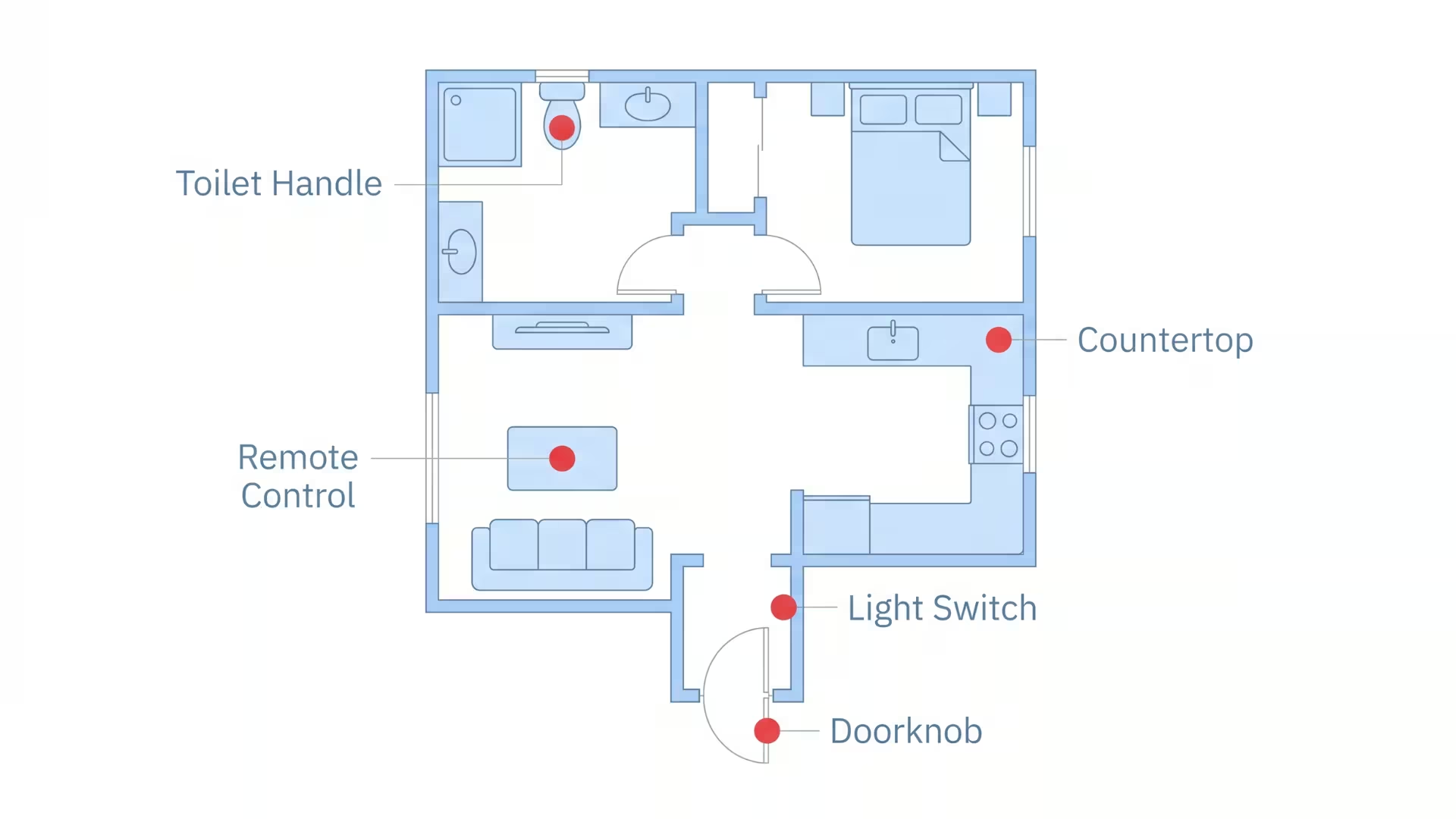
When dealing with norovirus in your home, the goal is to be thorough, not just quick. The virus spreads from surfaces people touch constantly, so focus your disinfection efforts on:
High-touch surfaces:
- Doorknobs and handles
- Light switches
- Remote controls
- Countertops (especially kitchen and bathroom)
- Toilet seat, flush handle, and surrounding surfaces
Kitchen and food areas:
- Kitchen utensils and cutting boards (run through the dishwasher on hot cycle)
- Food prep surfaces
- Sink handles
Shared items:
• Phones, tablets, keyboards
Apply your disinfectant (bleach and water solution or an EPA-registered disinfectant), leave it to dwell for the contact time listed on the label, then wipe clean. Don’t spray and immediately wipe — the solution needs time to work.
Does Hand Sanitizer Kill Norovirus?
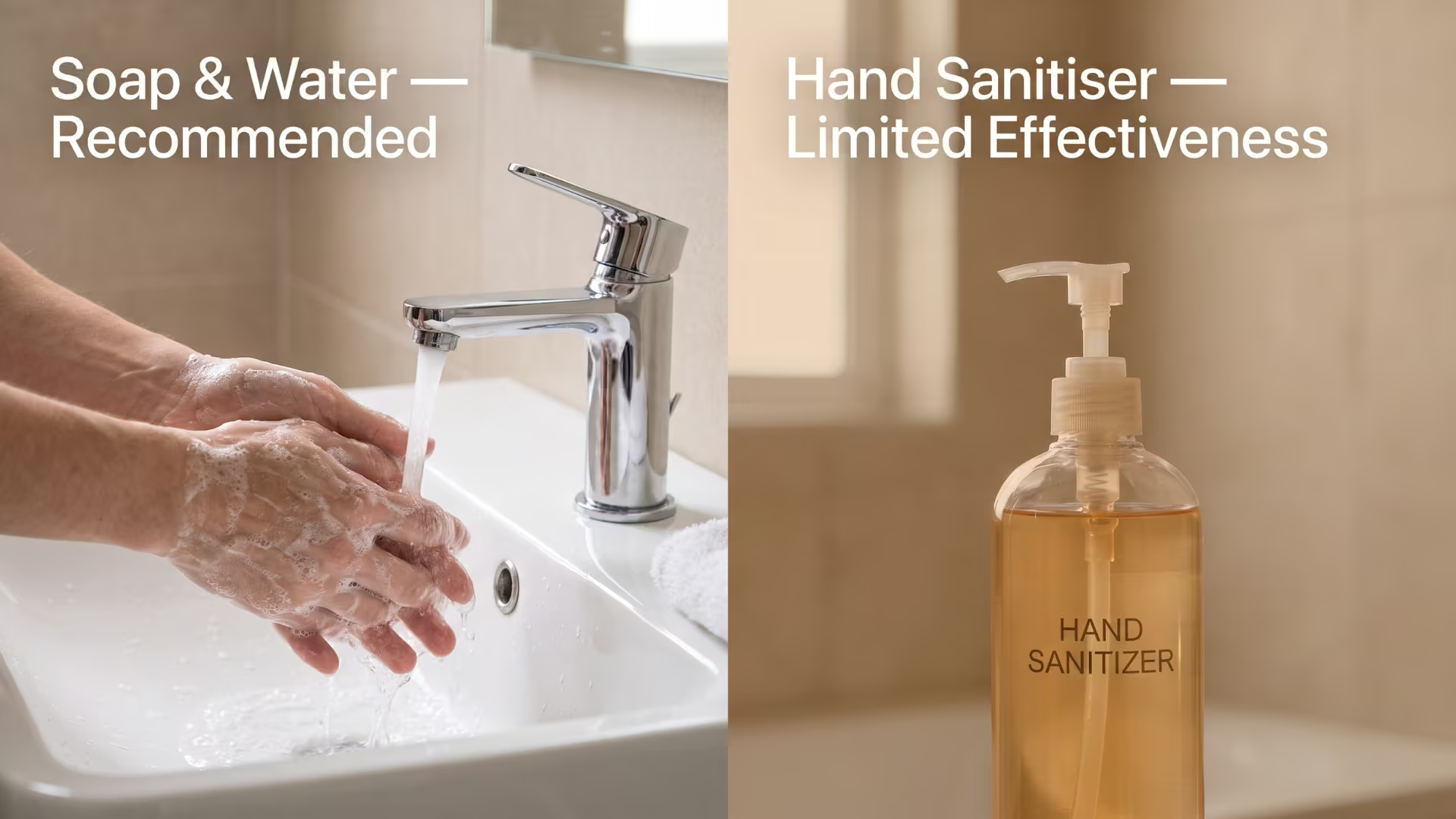
This is where a lot of people get caught out. Most alcohol-based hand sanitizers are not effective against norovirus, even at 60–70% alcohol concentration.
The CDC states that washing hands well with soap and warm water for at least 20 seconds is the recommended approach, and it’s considerably more effective than hand sanitizer for this particular virus. The physical action of washing hands — scrubbing, rinsing — helps remove norovirus particles mechanically in a way that sanitizer gels simply can’t replicate. That said, hand sanitizer is still better than nothing if soap isn’t available. But it shouldn’t be your only line of defence after caring for a sick person or using the toilet during an outbreak.
The CDC recommends always washing your hands:
The CDC states that washing hands well with soap and warm water for at least 20 seconds is the recommended approach, and it’s considerably more effective than hand sanitizer for this particular virus. The physical action of washing hands — scrubbing, rinsing — helps remove norovirus particles mechanically in a way that sanitizer gels simply can’t replicate. That said, hand sanitizer is still better than nothing if soap isn’t available. But it shouldn’t be your only line of defence after caring for a sick person or using the toilet during an outbreak.
The CDC recommends always washing your hands:
- After using the toilet
- After handling contaminated items or linen
- Before and after handling food
- After caring for someone who’s sick with norovirus

Does Hydrogen Peroxide Kill Norovirus?
Hydrogen peroxide is a step up from vinegar. At higher concentrations (around 3% and above), it shows better antimicrobial activity, and some EPA-registered products use it as an active ingredient against norovirus.
That said, standard 3% grocery store hydrogen peroxide may not be reliable enough on its own to kill norovirus. You’d want to specifically look for EPA-registered products that list norovirus on the label, rather than assume any hydrogen peroxide will do the job.
If you’re looking for a disinfectant that’s effective, non-toxic, and doesn’t carry the risks that bleach does, hypochlorous acid is worth knowing about. We cover this in detail in our guide on whether HOCl kills norovirus.
That said, standard 3% grocery store hydrogen peroxide may not be reliable enough on its own to kill norovirus. You’d want to specifically look for EPA-registered products that list norovirus on the label, rather than assume any hydrogen peroxide will do the job.
If you’re looking for a disinfectant that’s effective, non-toxic, and doesn’t carry the risks that bleach does, hypochlorous acid is worth knowing about. We cover this in detail in our guide on whether HOCl kills norovirus.
The Safer Alternative: Hypochlorous Acid (HOCl)
Bleach works, but it comes with a long list of caveats. It’s corrosive to skin, can damage fabrics, releases fumes in enclosed spaces, and the SDS sheet for sodium hypochlorite (NaOCl) lists it as a Category 1B skin corrosive, with a pH of 12–13 at standard concentration. Not exactly something you want to mist over your kitchen counters with children nearby.
Hypochlorous acid (HOCl) is a different story.
HOCl is actually produced naturally by your own white blood cells as part of your immune response to infection. It’s the same chemistry your body uses to fight pathogens — just concentrated and applied externally. At a neutral pH of 5–7, it’s non-irritating, non-corrosive, and leaves no toxic chemical residues behind. What makes it practically useful for households:
HOCl is actually produced naturally by your own white blood cells as part of your immune response to infection. It’s the same chemistry your body uses to fight pathogens — just concentrated and applied externally. At a neutral pH of 5–7, it’s non-irritating, non-corrosive, and leaves no toxic chemical residues behind. What makes it practically useful for households:
- Non-toxic if contacted by skin or eyes — no burns, no fumes
- Non-corrosive to metals, plastics, and surfaces
- Kills 99.99% of pathogens including bacteria, viruses, fungi, and even antibiotic-resistant strains like MRSA
- EPA and FDA approved for disinfection and wound care
- No harmful residues — it breaks down into water and salt after use
When compared side-by-side with bleach, the safety profile of HOCl stands out sharply. Bleach’s SDS data indicates severe eye damage (H318), serious skin burns (H314), and it’s highly toxic to aquatic life. HOCl carries none of those classifications at use concentrations.
For families dealing with norovirus — especially where kids, pets, or sensitive individuals are involved — HOCl offers a genuine alternative that doesn’t require you to evacuate the kitchen while you disinfect. You can read our full comparison of hypochlorous acid vs bleach to understand exactly how the two differ, or start with what hypochlorous acid actually is if you’re new to it.
For families dealing with norovirus — especially where kids, pets, or sensitive individuals are involved — HOCl offers a genuine alternative that doesn’t require you to evacuate the kitchen while you disinfect. You can read our full comparison of hypochlorous acid vs bleach to understand exactly how the two differ, or start with what hypochlorous acid actually is if you’re new to it.
Frequently Asked Questions
No. Vinegar has limited antimicrobial activity and no confirmed efficacy against norovirus. It can help with some bacteria but won’t prevent norovirus from spreading through a household
Norovirus can survive on hard surfaces for days to several weeks, depending on temperature and humidity. This is why thorough disinfection matters, not just a wipe-down.
Because it lacks a lipid envelope, norovirus is resistant to many common disinfectants that work by dissolving that outer layer. It requires stronger agents like bleach or EPA-registered disinfectants specifically tested against it.
Often yes. Most alcohol-based hand sanitizers are not reliably effective against norovirus. Washing hands thoroughly with soap and warm water for at least 20 seconds is the better approach.
Some EPA-registered products containing hydrogen peroxide are effective against norovirus, but standard 3% drugstore hydrogen peroxide isn’t guaranteed to work. Check for EPA registration on the label.
Wash contaminated items immediately on the hottest wash cycle your fabrics can tolerate, with detergent, and dry on high heat. Handle with gloves before washing to avoid spreading norovirus particles.


