
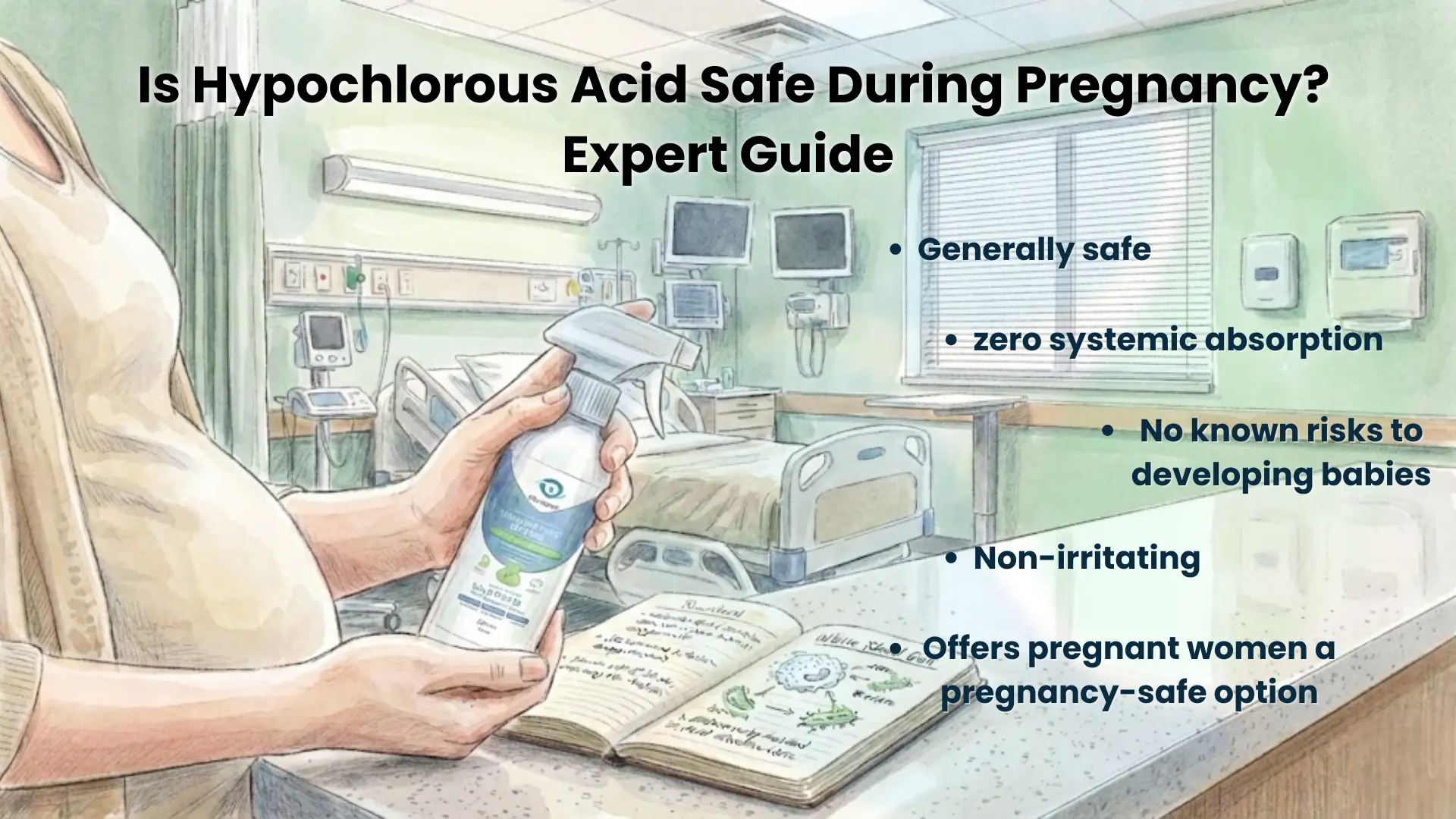
Yes, hypochlorous acid spray is generally safe during pregnancy. This gentle antimicrobial is produced naturally by your own white blood cells, has zero systemic absorption, and carries no known risks to developing babies. Pregnancy brings its own set of skin challenges like hormonal acne, increased sensitivity, eczema flare-ups and finding safe, effective treatments can feel overwhelming. The good news? Hypochlorous acid (HOCl) offers pregnant women a pregnancy-safe option that actually works.
Key Takeaways
- Your immune system produces hypochlorous acid naturally through white blood cells. it's already part of your body's defense system
- HOCl works only on the skin's surface with no absorption into your bloodstream, making it safe for both you and baby
- Unlike harsh treatments you must avoid during pregnancy (retinoids, high-dose salicylic acid), HOCl is non-irritating and safe for sensitive skin
- Addresses pregnancy acne, eczema, minor wounds, and irritation without the risks associated with traditional antiseptics
- Safe for all trimesters when using properly formulated products at appropriate concentrations (0.01-0.02%)

What Is Hypochlorous Acid and Why Use It During Pregnancy?
Hypochlorous acid isn’t some synthetic laboratory creation. it’s a natural molecule your body produces every single day.
Your immune system produces hypochlorous acid naturally through white blood cells. it’s already part of your body’s defense system HOCl works only on the skin’s surface with no absorption into your bloodstream, making it safe for both you and baby Unlike harsh treatments you must avoid during pregnancy (retinoids, high-dose salicylic acid), HOCl is non-irritating and safe for sensitive skin Addresses pregnancy acne, eczema, minor wounds, and irritation without the risks associated with traditional antiseptics Safe for all trimesters when using properly formulated products at appropriate concentrations (0.01-0.02%) When bacteria or viruses invade your system, specialized white blood cells called neutrophils rush to the scene.
These cellular defenders manufacture hypochlorous acid through an enzyme called myeloperoxidase, creating one of your body’s most effective antimicrobial weapons. In fact, neutrophils comprise 50-70% of all white blood cells in your blood, and they convert approximately 70% of their hydrogen peroxide into HOCl specifically for fighting infection.
Your immune system produces hypochlorous acid naturally through white blood cells. it’s already part of your body’s defense system HOCl works only on the skin’s surface with no absorption into your bloodstream, making it safe for both you and baby Unlike harsh treatments you must avoid during pregnancy (retinoids, high-dose salicylic acid), HOCl is non-irritating and safe for sensitive skin Addresses pregnancy acne, eczema, minor wounds, and irritation without the risks associated with traditional antiseptics Safe for all trimesters when using properly formulated products at appropriate concentrations (0.01-0.02%) When bacteria or viruses invade your system, specialized white blood cells called neutrophils rush to the scene.
These cellular defenders manufacture hypochlorous acid through an enzyme called myeloperoxidase, creating one of your body’s most effective antimicrobial weapons. In fact, neutrophils comprise 50-70% of all white blood cells in your blood, and they convert approximately 70% of their hydrogen peroxide into HOCl specifically for fighting infection.
Why Pregnant Women Turn to HOCl:
Pregnancy transforms your skin in unexpected ways. Surging hormones trigger oil production. Your immune system shifts. Skin becomes more reactive and sensitive than ever before.
Many of the skincare treatments you relied on before pregnancy like retinoids, high-percentage salicylic acid, benzoyl peroxide in strong concentrations can suddenly land on the “avoid” list. This leaves pregnant women searching for alternatives that won’t harm their developing baby but can still address real skin concerns. Hypochlorous acid spray fills this gap perfectly.
It’s gentle enough for the most sensitive pregnancy skin, yet powerful enough to kill bacteria, reduce infection risk, and calm inflammation. Because it’s biomimetically identical to what your immune system naturally produces, your body recognizes and tolerates it beautifully.
Many of the skincare treatments you relied on before pregnancy like retinoids, high-percentage salicylic acid, benzoyl peroxide in strong concentrations can suddenly land on the “avoid” list. This leaves pregnant women searching for alternatives that won’t harm their developing baby but can still address real skin concerns. Hypochlorous acid spray fills this gap perfectly.
It’s gentle enough for the most sensitive pregnancy skin, yet powerful enough to kill bacteria, reduce infection risk, and calm inflammation. Because it’s biomimetically identical to what your immune system naturally produces, your body recognizes and tolerates it beautifully.
The Safety Profile: Can You Use Hypochlorous Acid Spray While Pregnant?
Let’s address the elephant in the room: Is this actually safe for pregnancy?
The evidence strongly supports yes.
The evidence strongly supports yes.
What the Research Shows:
A comprehensive study published in the PMC database examined occupational exposure to high-level disinfectants among nurses, including hypochlorous acid and hypochlorite. The researchers found no association between hypochlorous acid exposure and increased miscarriage risk—unlike several other disinfectants that showed concerning patterns.
This matters because these healthcare workers had regular, repeated exposure at concentrations higher than typical skincare products.
This matters because these healthcare workers had regular, repeated exposure at concentrations higher than typical skincare products.
Zero Systemic Absorption:
What makes hypochlorous acid uniquely safe during pregnancy is that it doesn’t enter your bloodstream. When you spray HOCl on your skin, it works exclusively on the surface.
The molecule is too large and unstable to penetrate deeply or absorb systemically. This means there’s no pathway for it to reach your developing baby through your bloodstream or affect hormonal systems.
The molecule is too large and unstable to penetrate deeply or absorb systemically. This means there’s no pathway for it to reach your developing baby through your bloodstream or affect hormonal systems.
Dermatologist Perspectives
Board-certified dermatologists increasingly recommend hypochlorous acid spray as a pregnancy-safe skincare option. Clinical studies demonstrate exceptional tolerability across diverse skin types, with a superior safety profile compared to conventional antimicrobial agents used in skin care products.
Unlike benzoyl peroxide (which commonly induces redness and dryness) or chlorhexidine gluconate (which may trigger contact dermatitis), HOCl maintains its bacteria-fighting power without compromising your skin’s protective barrier.
Unlike benzoyl peroxide (which commonly induces redness and dryness) or chlorhexidine gluconate (which may trigger contact dermatitis), HOCl maintains its bacteria-fighting power without compromising your skin’s protective barrier.
FDA Status and Medical Use
Hypochlorous acid products hold FDA clearance as medical devices for wound care and skin treatment.
The FDA classification indicates these products are “non-cytotoxic”—meaning they don’t damage living cells, a crucial safety distinction. Pure & Clean and similar FDA-cleared HOCl wound cleansers specifically note they’re “familysafe” and contain no harsh chemicals or preservatives.
While the standard medical guidance recommends consulting your physician before using any new product during pregnancy, the safety profile of topical hypochlorous acid is well-established in medical settings.
The FDA classification indicates these products are “non-cytotoxic”—meaning they don’t damage living cells, a crucial safety distinction. Pure & Clean and similar FDA-cleared HOCl wound cleansers specifically note they’re “familysafe” and contain no harsh chemicals or preservatives.
While the standard medical guidance recommends consulting your physician before using any new product during pregnancy, the safety profile of topical hypochlorous acid is well-established in medical settings.
How Hypochlorous Acid Spray Benefits Pregnancy Skin Conditions?
Let’s explore how hypochlorous acid spray addresses the most common pregnancy skin
challenges without the risks.
- Manages Pregnancy Acne
- Helps with Eczema & Seborrheic Dermatitis
- Reduces Inflammation & Redness
- Heals Minor Wounds Safely
- Fights Bacteria Without Antibiotics

What Makes Hypochlorous Acid Different from Other Skincare Treatments?
Not all antimicrobials are created equal.
Natural vs. Synthetic Antimicrobials:
Most commercial disinfectants and antibacterial products contain synthetic compounds foreign to your body.
Triclosan (now banned in many countries), quaternary ammonium compounds, and alcoholbased sanitizers all introduce chemicals your body must process and eliminate. Hypochlorous acid takes the opposite approach. Your neutrophils produce approximately 0.2 µmol of HOCl during just 2 hours of immune activity.
When you apply it topically, you’re supplementing a process already happening inside your body and not introducing foreign substances. Curious about production methods? Discover how hypochlorous acid is formed through safe electrolysis.
Triclosan (now banned in many countries), quaternary ammonium compounds, and alcoholbased sanitizers all introduce chemicals your body must process and eliminate. Hypochlorous acid takes the opposite approach. Your neutrophils produce approximately 0.2 µmol of HOCl during just 2 hours of immune activity.
When you apply it topically, you’re supplementing a process already happening inside your body and not introducing foreign substances. Curious about production methods? Discover how hypochlorous acid is formed through safe electrolysis.
Gentle Properties vs. Harsh Alternatives:
Compare hypochlorous acid spray to what it replaces:
Hydrogen peroxide bubbles and foams because it’s literally destroying everything it touches— healthy cells and bacteria alike. It delays wound healing and can cause irritation.
Alcohol strips your skin’s natural oils, disrupts the moisture barrier, and stings open wounds. May cause excessive dryness that worsens pregnancy skin sensitivity.
Bleach-based products (sodium hypochlorite at household concentrations) are corrosive, can cause chemical burns, and emit toxic fumes. Contact with acids liberates dangerous gas. Learn more about HOCl vs. bleach differences.
Hydrogen peroxide bubbles and foams because it’s literally destroying everything it touches— healthy cells and bacteria alike. It delays wound healing and can cause irritation.
Alcohol strips your skin’s natural oils, disrupts the moisture barrier, and stings open wounds. May cause excessive dryness that worsens pregnancy skin sensitivity.
Bleach-based products (sodium hypochlorite at household concentrations) are corrosive, can cause chemical burns, and emit toxic fumes. Contact with acids liberates dangerous gas. Learn more about HOCl vs. bleach differences.
No Side Effects for Most People:
Clinical observations report minimal adverse effects from properly formulated hypochlorous acid. Any mild irritation typically stems from concentration or pH factors—not the HOCl molecule itself. Products formulated at the optimal pH range of 3.5 to 5.5 maintain stability while minimizing any potential for sensitivity.
This is crucial during pregnancy when your skin becomes unpredictably reactive to products that never bothered you before.
HOCl at proper concentrations (0.01-0.02%) works at a pH of 5-6, matching your skin’s natural slightly acidic environment. No stinging, no burning, no harsh side effects for most people.
This is crucial during pregnancy when your skin becomes unpredictably reactive to products that never bothered you before.
HOCl at proper concentrations (0.01-0.02%) works at a pH of 5-6, matching your skin’s natural slightly acidic environment. No stinging, no burning, no harsh side effects for most people.
Safe on Sensitive Skin During Hormonal Changes:
Pregnancy hormones don’t just affect your uterus, they transform your entire body, including your skin’s structure and reactivity. What worked beautifully pre-pregnancy might suddenly cause redness, burning, or breakouts.
Hypochlorous acid’s hypoallergenic nature makes it safe for individuals with allergies, asthma, or chemical sensitivities. The molecule is naturally occurring in your body, fragrance-free, and contains no harsh chemical additives in quality formulations.
Hypochlorous acid’s hypoallergenic nature makes it safe for individuals with allergies, asthma, or chemical sensitivities. The molecule is naturally occurring in your body, fragrance-free, and contains no harsh chemical additives in quality formulations.
How to Use Hypochlorous Acid Spray Safely During Pregnancy
Getting the most from hypochlorous acid means understanding proper application and choosing
the right products.
Recommended Concentration Levels:
For pregnancy skincare, look for products containing 0.01% to 0.02% hypochlorous acid. Research shows 0.01% HOCl delivers antimicrobial efficacy equal to much stronger traditional antiseptics, so you don’t need high concentrations.
Higher concentrations (above 0.02%) are typically reserved for medical settings and wound care under professional supervision. The concentration sweet spot balances effectiveness with the gentle treatment your pregnancy skin needs.
Higher concentrations (above 0.02%) are typically reserved for medical settings and wound care under professional supervision. The concentration sweet spot balances effectiveness with the gentle treatment your pregnancy skin needs.
Looking for quality products? Check out Aqua Protego Hypochlorous Acid Face Spray in the UAE which is formulated specifically for facial care.
Application Methods: Mist, Spray, Targeted Treatment:
- As a facial mist: Spray 6-8 inches from your face after cleansing, before other products. Let it dry naturally (about 30-60 seconds) before applying moisturizer.
- For targeted acne treatment: Apply directly to breakouts 2-3 times daily. The bacteriafighting properties work best with consistent use.
- Post-workout refresh: Spray on your face and body immediately after exercise to kill bacteria before they cause breakouts from sweat.
- Scalp treatment: Apply to scalp for seborrheic dermatitis or dandruff. Massage gently and leave on—no rinsing needed.
- Wound care: Spray directly on minor cuts, scrapes, or irritated skin to disinfect and promote healing.
Frequency of Use:
Most dermatologists recommend using hypochlorous acid spray 1-2 times daily for general skincare. For active acne or eczema flare-ups, you can safely use it 2-3 times daily without over-drying your skin.
Unlike harsh treatments that require careful spacing and “skin tolerance building,” HOCl is gentle enough for frequent application. The key is consistency. Regular use prevents bacterial overgrowth rather than just reacting to breakouts after they appear.
Unlike harsh treatments that require careful spacing and “skin tolerance building,” HOCl is gentle enough for frequent application. The key is consistency. Regular use prevents bacterial overgrowth rather than just reacting to breakouts after they appear.
Areas to Avoid:
While hypochlorous acid is remarkably safe, use common sense with application:
- Prolonged exposure concerns: Don’t leave it sitting in one concentrated area for extended periods. Spray, let dry, move on.
- Open wounds: While safe for wound cleaning, very deep or serious wounds require medical attention. Use HOCl for minor scrapes and cuts only.
- Eye contact: Though less irritating than most products, avoid direct spray into eyes. If it happens, rinse with water.
- Mucous membranes: Safe around the nose and mouth but not intended for internal use.
When to See a Dermatologist:
Consult a dermatologist if you experience:
- Persistent acne that doesn’t improve after 4-6 weeks of consistent HOCl use
- Severe eczema or dermatitis that covers large body areas
- Any signs of infection (increased redness, warmth, pus, fever)
- Unexpected skin reactions or sensitivity
- Questions about combining HOCl with other pregnancy-safe treatments
Your dermatologist can provide personalized recommendations and medical advice specific to
your pregnancy and skin type.
Want to explore safer cleaning alternatives for your home? Read about how to kill mold without bleach.
FAQ: Hypochlorous Acid During Pregnancy
For many pregnant women, yes—especially if your pre-pregnancy treatment contained ingredients now off-limits like retinoids or high-dose benzoyl peroxide. Clinical trials show hypochlorous acid performs comparably to benzoyl peroxide for mild to moderate inflammatory acne, but with far less irritation. However, if you have severe cystic acne or your breakouts don’t respond to HOCl after 4-6 weeks of consistent use, consult a dermatologist for additional pregnancy-safe options like azelaic acid or professional treatments.
Most dermatologists recommend 1-2 times daily for general skincare and prevention. For active breakouts or eczema flare-ups, you can safely increase to 2-3 times daily. HOCl is gentle enough for frequent application without the over-drying or irritation associated with traditional acne treatments. The key is consistency over intensity—regular gentle care delivers better results than occasional aggressive treatment.
Yes, and here’s why: hormonal acne results from increased sebum production creating an environment where C. acnes bacteria thrive. While HOCl can’t change your hormone levels, it effectively kills the bacteria responsible for inflammatory acne and reduces the inflammation that makes hormonal breakouts so painful and persistent. Many pregnant women notice improvement in breakout frequency and severity within 2-4 weeks of adding HOCl spray to their skincare routine.
Yes—this is actually one of HOCl’s primary medical applications. FDA-cleared hypochlorous acid wound cleansers are specifically designed for cleaning open wounds, and they’re classified as non-cytotoxic (won’t damage healing tissue). For minor cuts, scrapes, and abrasions, spray directly on the wound to clean debris and prevent infection. The antimicrobial properties work without the stinging and tissue damage caused by hydrogen peroxide or alcohol. For deeper wounds, significant injuries, or any signs of infection, seek medical attention regardless of at-home treatment.
Yes, hypochlorous acid is considered safe throughout pregnancy—first, second, and third trimesters. The safety stems from two key factors: (1) your body produces it naturally as part of immune function, and (2) zero systemic absorption means it can’t enter your bloodstream or reach your developing baby. Studies of healthcare workers with occupational HOCl exposure found no association with pregnancy complications across all trimesters. However, as with any skincare product during pregnancy, discuss with your healthcare provider if you have specific concerns about your individual situation.
Properly formulated hypochlorous acid should not sting or burn—even on sensitive pregnancy skin. If you experience stinging, it typically indicates:
- The product has a pH outside the optimal 3.5-5.5 range
- High concentration of hypochlorite (OCl-) rather than HOCl
- Additional irritating ingredients in the formulation
Conclusion: A Safe, Effective Choice for Pregnancy Skincare
Pregnancy transforms your skin in ways you never expected—sudden acne, unpredictable sensitivity, conditions you’ve never dealt with before.
Finding treatments that actually work without risking your baby’s health feels like an impossible balance. Hypochlorous acid breaks this stalemate. It’s produced naturally by your immune system, works exclusively on your skin’s surface with zero systemic absorption, and has clinical evidence supporting both safety and efficacy. Studies confirm no association with pregnancy complications.
Dermatologists increasingly recommend it as a gentle alternative to harsh antiseptics. The molecule itself is biomimetically identical to what your neutrophils produce every day to fight infection.
Whether you’re battling hormonal breakouts, managing eczema flare-ups, or simply want a safe way to keep your skin clean and healthy throughout pregnancy, hypochlorous acid spray offers a solution backed by science and real-world results.
That said: every pregnancy is unique. Before adding any new product to your routine—even one as well-studied as HOCl—discuss it with your healthcare provider. Bring this article, share the research, ask questions.
Make informed decisions about your skin care that align with your overall pregnancy health plan. Your skin deserves effective treatment. Your baby deserves safety. With hypochlorous acid, you don’t have to choose between the two.
Ready to explore HOCl products? Visit our shop for pregnancy-safe hypochlorous acid solutions, or learn how we test products to ensure quality and safety.
Finding treatments that actually work without risking your baby’s health feels like an impossible balance. Hypochlorous acid breaks this stalemate. It’s produced naturally by your immune system, works exclusively on your skin’s surface with zero systemic absorption, and has clinical evidence supporting both safety and efficacy. Studies confirm no association with pregnancy complications.
Dermatologists increasingly recommend it as a gentle alternative to harsh antiseptics. The molecule itself is biomimetically identical to what your neutrophils produce every day to fight infection.
Whether you’re battling hormonal breakouts, managing eczema flare-ups, or simply want a safe way to keep your skin clean and healthy throughout pregnancy, hypochlorous acid spray offers a solution backed by science and real-world results.
That said: every pregnancy is unique. Before adding any new product to your routine—even one as well-studied as HOCl—discuss it with your healthcare provider. Bring this article, share the research, ask questions.
Make informed decisions about your skin care that align with your overall pregnancy health plan. Your skin deserves effective treatment. Your baby deserves safety. With hypochlorous acid, you don’t have to choose between the two.
Ready to explore HOCl products? Visit our shop for pregnancy-safe hypochlorous acid solutions, or learn how we test products to ensure quality and safety.
Disclaimer: This article provides educational information and should not replace professional
medical advice. Always consult your healthcare provider before starting new skincare products
during pregnancy.


